

Children, concentration & learning
My child is struggling to learn to ride a bike: Which part is difficult?
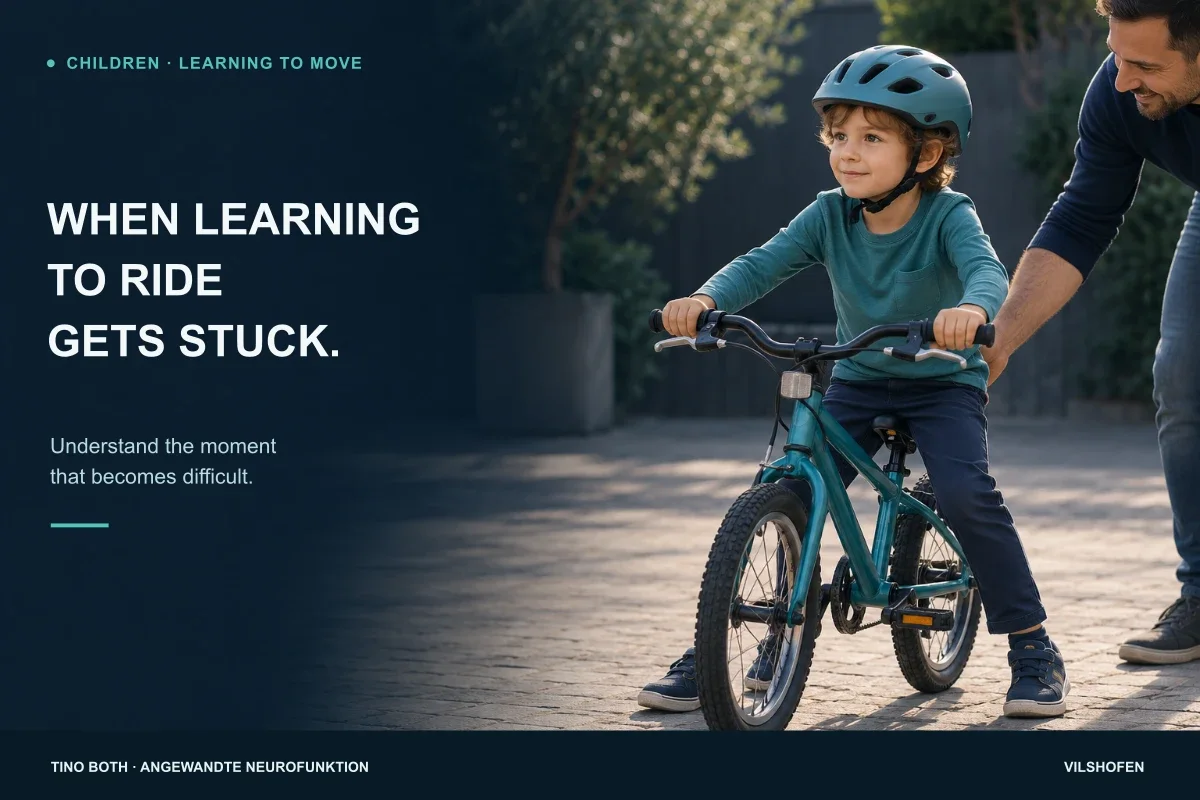
The bicycle fits, the practice area is quiet and your child wants to try. Yet every start becomes difficult. Feet search for the pedals, gaze drops or the movement tips sideways during the first steering attempt. After several tries, disappointment grows.
In Vilshofen, Tino Both uses Angewandte Neurofunktion to examine how gaze, balance and movement control work together in a specific task. When learning to ride repeatedly gets stuck, the part requiring particular attention and support can be explored more closely.
Starting and staying in motion are different tasks
To start, a child has to align the bicycle, push off or pedal and stabilise the initial movement. Rolling adds steering, braking and awareness of the surroundings.
It is therefore useful to establish what already works. Can the child roll calmly on a balance bike? Does difficulty appear only when pedals are involved? Is riding straight manageable while steering requires a lot of attention?
These differences provide more direction than the broad description that the child cannot ride a bike. They also help identify a practice stage the child can build on.
Considering gaze direction and body control together
Many children look at their feet or the front wheel when starting. This also changes their orientation towards the route ahead. When the head turns, the body has to organise steering and balance under a different condition.
Tino can initially examine how gaze and movement fit together without a bicycle. A secure standing or walking task is connected with a clear target. A small head or gaze movement is then added.
The question stays specific: does this simple combination already become uncertain, or is the main difficulty in the sequence on the bike? The observed pattern guides further choices.
An example: pedalling works, but looking up creates instability
Consider a child who manages short distances while looking down calmly. Looking ahead makes steering more hurried.
Functional assessment begins with a manageable task away from cycling. The child uses an easy-to-see target for orientation and performs a simple weight shift or stepping sequence. The same movement is then compared with a small change in gaze.
Tino records what changes performance: the target, head movement, direction or an additional movement demand. Tasks remain short and understandable for the child.
This helps identify where preparation could be useful. The assessment produces a specific question for the next stage of practice.
How focused work can support preparation
According to the observation, Tino selects an appropriate sensory or movement task. This might involve clear orientation towards a target, a suitably dosed eye-head task or a simple body-awareness activity.
After the selected input, the original task is compared again. If it becomes more organised or less effortful, its relevance to learning to ride is considered.
The connection to the child's goal remains central. A useful next step might be practising forward gaze under an easier movement condition and then adding it to a familiar stage of cycling practice.
The comparison guides the choice. A long collection of extra exercises is not required.
Changing one thing at a time during cycling practice
A suitable bicycle, well-fitting helmet and clear traffic-free space form the foundation for practice. The child should feel sufficiently secure at the selected stage.
One part of the sequence is considered first: a calm start, a short rolling section or a familiar direction change. Adding speed, different steering and a new signal at the same time creates a substantially different task.
Short rounds with breaks allow feedback. The child can describe what feels easier and when support is needed again. Later attempts show whether the selected preparation continues to be useful.
What parents can describe during the introductory call
The precise moment when practice becomes difficult is useful: starting, finding the pedals, looking up, steering or braking. Differences between a balance bike and a pedal bicycle may be informative too.
The child's own experience matters. Is letting go worrying? Is the task physically effortful? Does looking ahead feel uncertain?
Newly frequent falls, pain, unusual vision or loss of previously secure skills call for paediatric assessment. Existing findings can inform the functional assessment.
Functional support in Vilshofen
Tino Both works with children and families in Vilshofen an der Donau, also serving the Passau and Deggendorf area. A free introductory phone call clarifies which task is difficult and whether a functional look at perception and movement suits the concern.
Assessment can start with simple prerequisites away from cycling. This can help identify understandable next steps for the movement and connect them with experiences during practice.
Does your child want to learn to ride but repeatedly get stuck at the same point? Describe that moment to Tino and discuss where support could begin.
Book a free initial conversation for your child
Frequently asked questions
Does the child need to bring a bicycle?
Simple tasks without a bicycle are useful for many initial questions. Suitable arrangements can be discussed before the appointment.
What matters when balance-bike riding already works well?
It is then worth examining the additional demands of a pedal bicycle: starting, pedalling, body position and their connection with steering.
How does an exercise connect back to cycling?
A helpful difference is carried into a familiar, safe practice stage. The actual experience of cycling and subsequent progress then guide the next step.