

Examine unusual responses in a targeted, reproducible way.
Neuroathletic training & Applied Neurofunction in Vilshofen
Neuroathletic training and Applied Neurofunction
Many people are now familiar with neuroathletic training. My work, however, goes beyond a single training or treatment system.
Under the name Applied Neurofunction I bring together different neurocentric approaches to assess functions in a targeted way, test suitable solutions and then integrate positive changes within the nervous system.
No rigid method:
What matters is not which system an input comes from, but how the individual responds to it and whether a change can be checked in a clear, reproducible way.
Compare directly which input brings about a positive change.
Connect the solution we find with the input that previously caused difficulty.
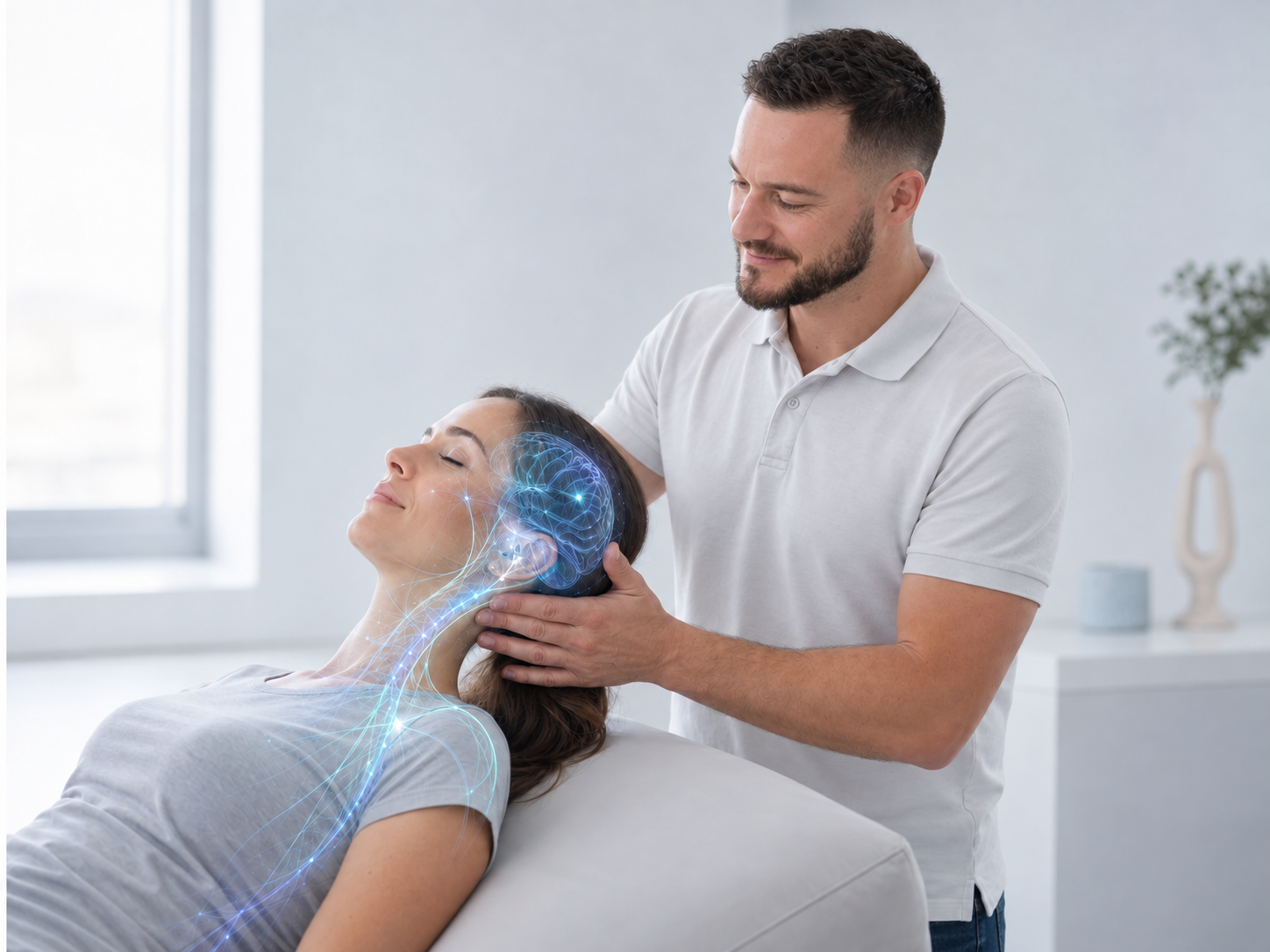
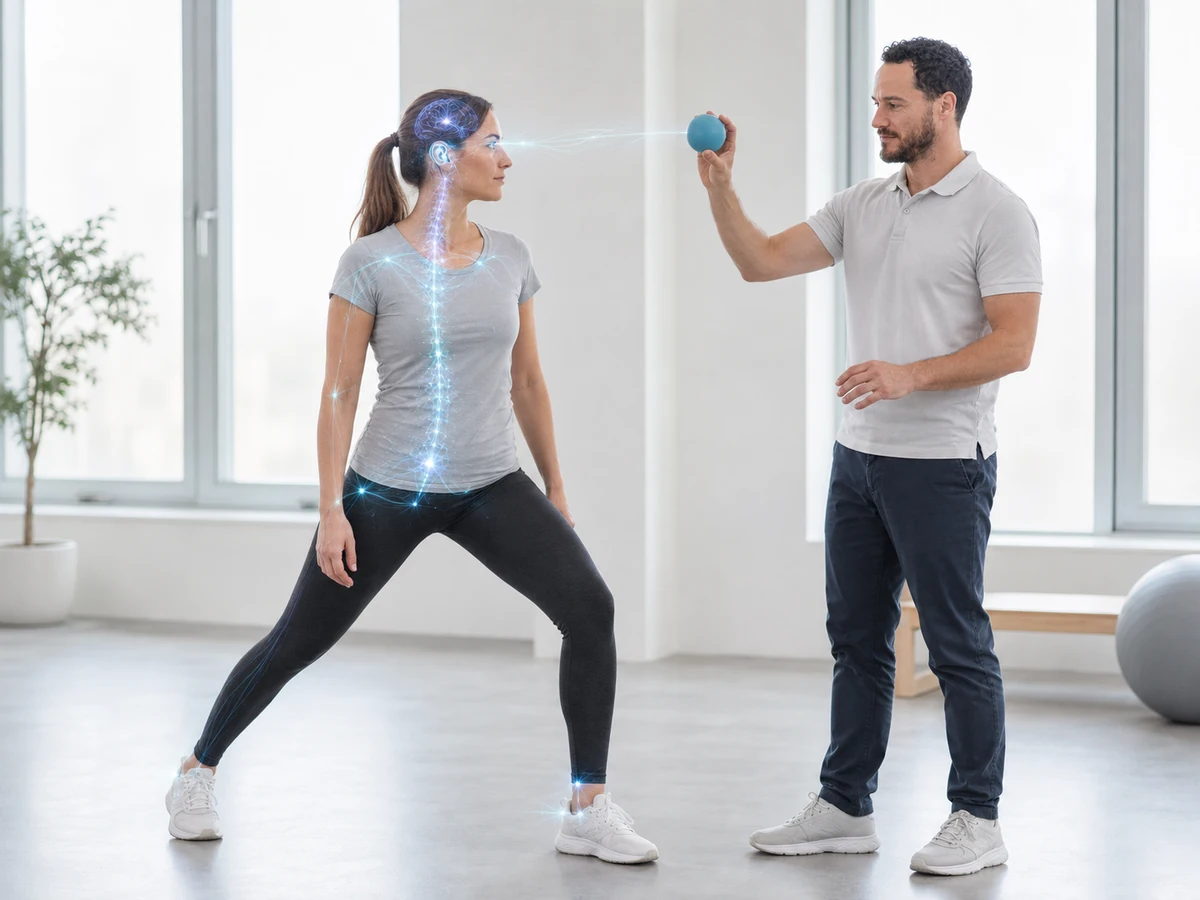
About these images: The scene images on this page are AI-generated illustrations. They do not show real clients or document actual situations in my practice.
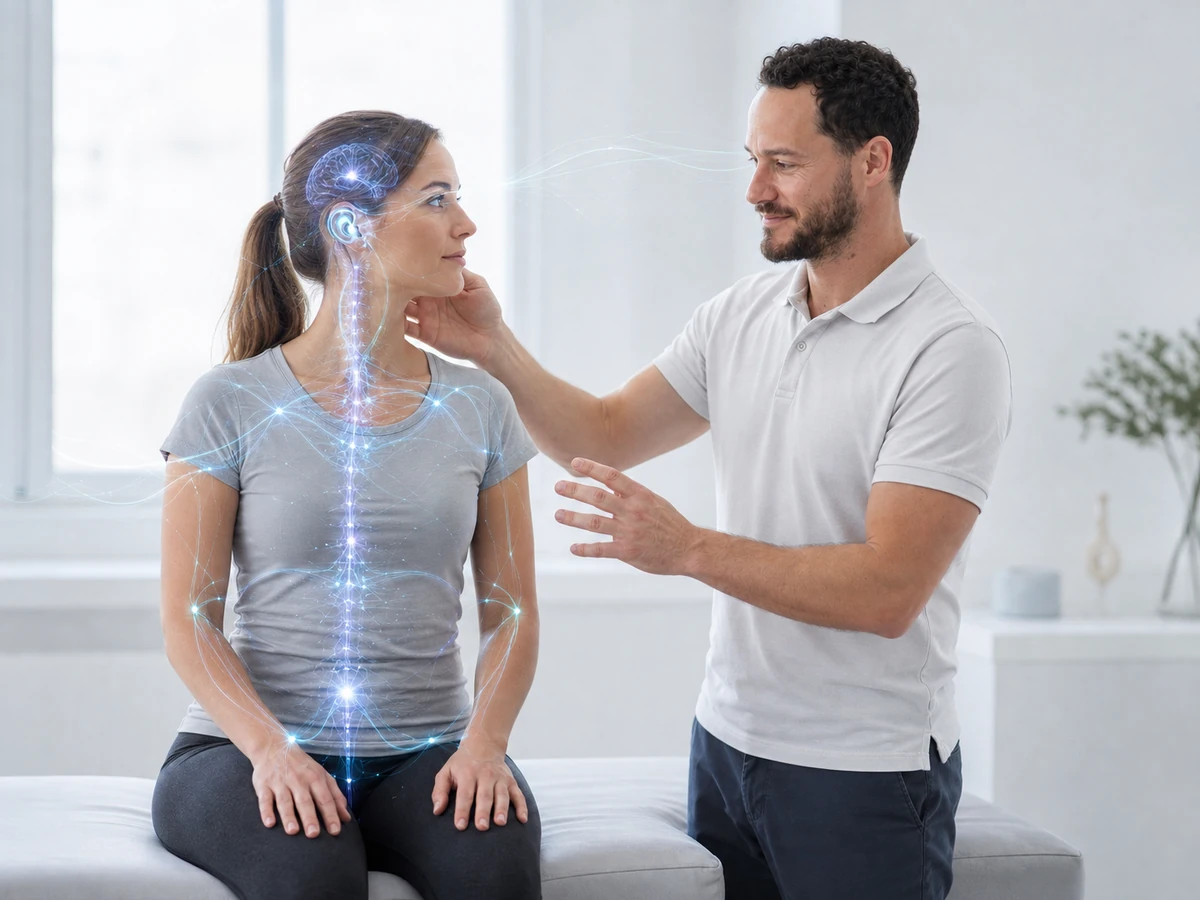
The basic principle
Receive information, assess responses and integrate solutions
Input
→
Processing
→
Response
→
Reassessment
The nervous system as an information exchange system
Perception, movement and regulation are connected
The nervous system continually receives information from the eyes, balance system, skin, joints, muscles and inside the body. It evaluates this information and organises appropriate motor and autonomic responses. This is why very different functions can be included in a shared process of testing and comparison.
Receive input
Sensory systems report what is happening outside and within the body.
Process information
The brain weighs the signals and relates them to the current situation.
Organise responses
Movement, muscle tension, orientation and regulation are continually adjusted.
Responses can become apparent quickly: Because this system works in real time, a well-chosen repeat test often immediately shows whether an additional input makes the assessed function easier, harder or leaves it unchanged.
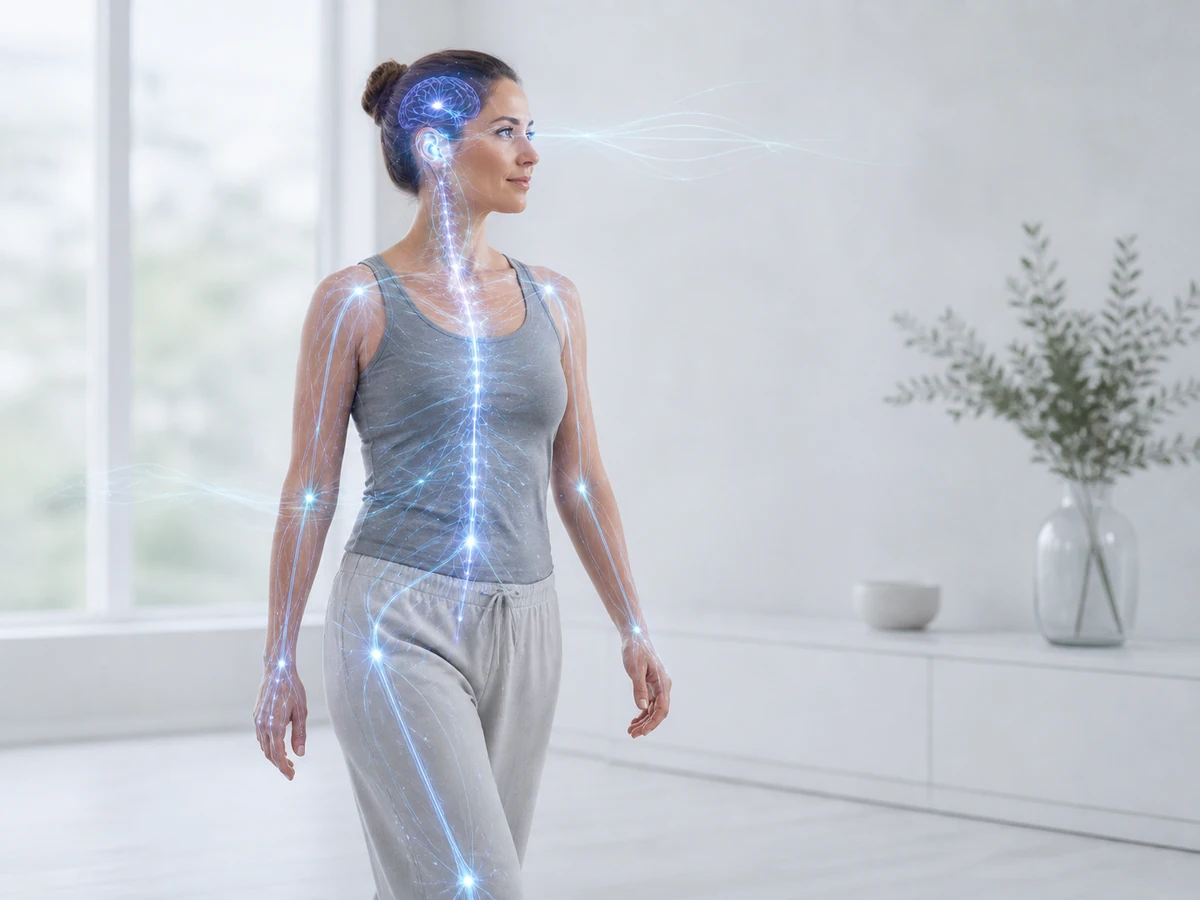
An individual combination of different approaches
Applied Neurofunction is not a single method
The term describes the way I work: I combine tools from different neurofunctional and neurocentric systems. I choose them according to what can usefully be assessed and directly compared for each person, rather than following a rigid protocol.
Neurofunctional integration
This forms the core of my assessment and integration approach: identify unusual responses, test possible connections, develop a suitable solution and then deliberately encode it within the nervous system.
Neuroathletic training, Z-Health and receptor-based approaches
Depending on the question, visual, vestibular, proprioceptive, motor or other receptor-related inputs are included in assessment and training.
Test, targeted input and retest
Movement, balance, coordination, perception or other suitable functions serve as a reference. This makes it immediately apparent whether a chosen input changes the response.
Muscle testing is not an indispensable foundation of this work. I can use it as an additional feedback tool to make a change directly noticeable and understandable for the client. The approach also works with other functional reference tests.
Compare functional systems
Which systems can be included in the assessment?
Depending on the symptoms, goals and responses, we select individual areas and explore their relationships. The aim is to identify the next useful connection, rather than test as much as possible at once.
Visual system
Saccades, smooth pursuit, near-to-far focus changes, peripheral vision and coordination between the two eyes.
Balance system
Head positions, gaze stability and the processing of acceleration and spatial orientation.
Body awareness
Information from joints, muscles, tendons and skin about position, tension and movement.
Motor control
Movement planning, the amount of force used, coordination and interaction between different parts of the body.
Autonomic regulation
Responses to changes in position, breathing, exertion and other inputs associated with autonomic regulation.
Cranial and segmental relationships
Functional assessments involving the head, cranial nerves, spine and associated sensory structures.
Mental systems & psychological context
Thoughts, feelings, attention and experienced stress can also be included in the functional assessment. Using suitable reference tests, we compare whether and how your response changes in a particular mental context.
The common thread: Each area supplies information to the nervous system. This means that inputs which initially appear unrelated can be explored together through a clear test–retest comparison.
The process
From discussing your history to the final overall comparison
The assessment follows a clear sequence. It remains flexible enough to respond to you as an individual, rather than simply work through a predefined programme.
Discuss your history
We discuss symptoms, demands, previous findings, goals and situations in which the problem is particularly noticeable.
Optional neurofunctional screening
Depending on the question, we build a functional overview of selected visual, vestibular, proprioceptive, motor and autonomic responses.
Assess specific functions
Unusual responses or functions relevant to daily life are recorded as clearly and reproducibly as possible using suitable reference tests.
Put unusual responses in context
We explore which sensory or regulatory influences might be associated with the observed response and narrow the search step by step.
Develop and test suitable solutions
Possible inputs or exercises are applied individually and compared directly with the initial test. We only pursue a response further when it is demonstrably helpful in that comparison.
Integrate the solution within the nervous system
The suitable solution is deliberately linked with the input that previously produced an unusual response. In my approach, this ‘encoding’ step is central: it is intended to establish the new response more steadily, rather than immediately return to the old pattern at the next encounter.
Repeat all initial tests that showed a difficulty
At the end, we repeat and compare not only individual intermediate tests, but also the tests from the initial screening that showed unusual responses.
The aim is a process you can follow: Document the initial response, deliberately bring about a change, integrate it and then reassess under the same conditions.
Three different pathways
What a neurofunctional workflow can look like in practice
These examples show local, sensory and regulatory approaches. The individual's response in the test–retest comparison always remains central.
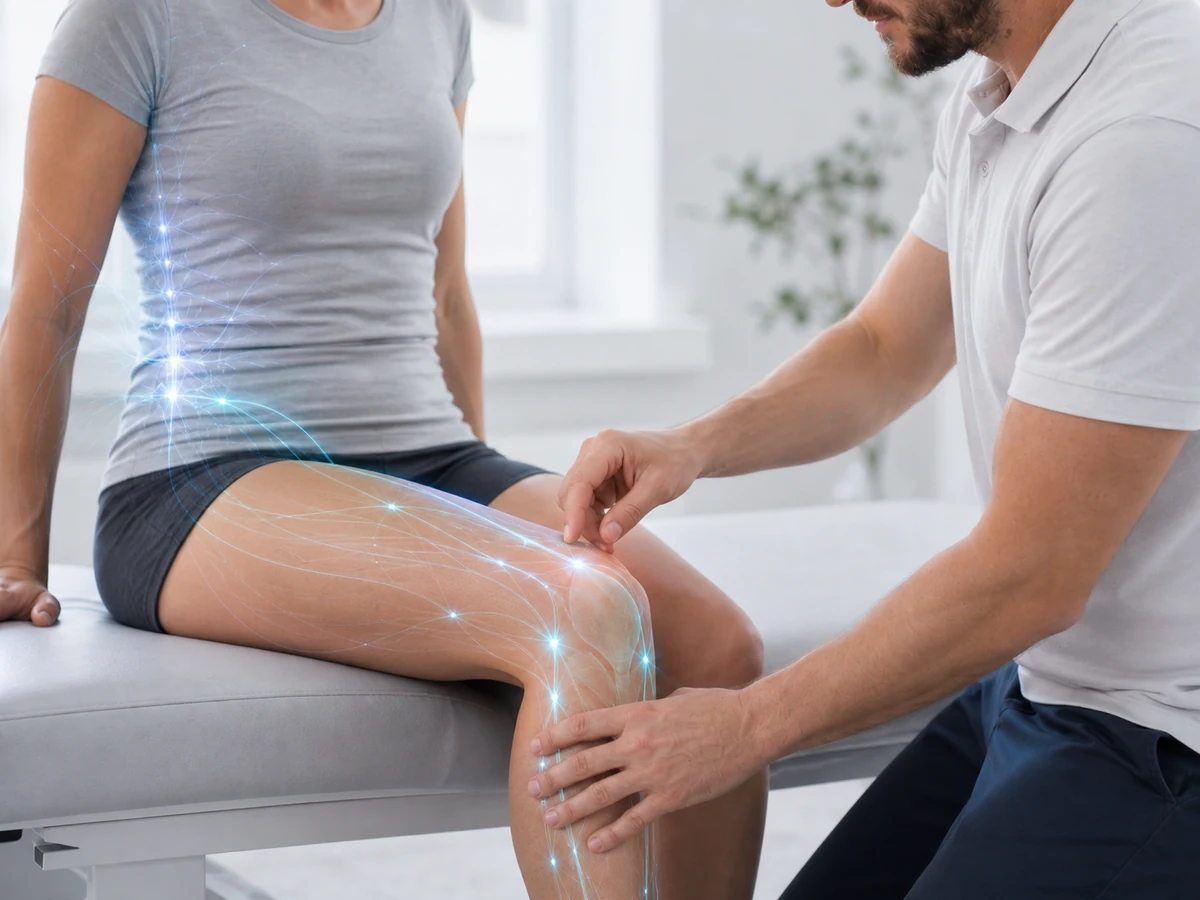 Anonymised practice example
Right knee pain: from local input to broader regulation
Right knee pain: from local input to broader regulation
The starting point was a painful movement test of the right knee. We first addressed local sensory input: through the patellar tendon reflex, a targeted skin stretch at the knee and reciprocal activation of the quadriceps and hamstrings.
The patellar tendon reflex assesses the reflex arc through the femoral nerve and spinal segments L2 to L4, predominantly L4. Further assessment also revealed an unusual autonomic response in the associated lumbar spine area. The NeuroFI test of arterial inflow at the spine likewise produced a non-physiological inhibition of the indicator muscle used.
Appropriate contact in the region of the medulla oblongata — an important part of autonomic control — stabilised the test response. This input was then integrated with the response that had previously been unusual.
Outcome of this session: In the final repeat test, the previously painful knee movement was pain-free.
Initial testLocal sensory inputLumbar relationshipMedulla oblongataIntegrationRetest
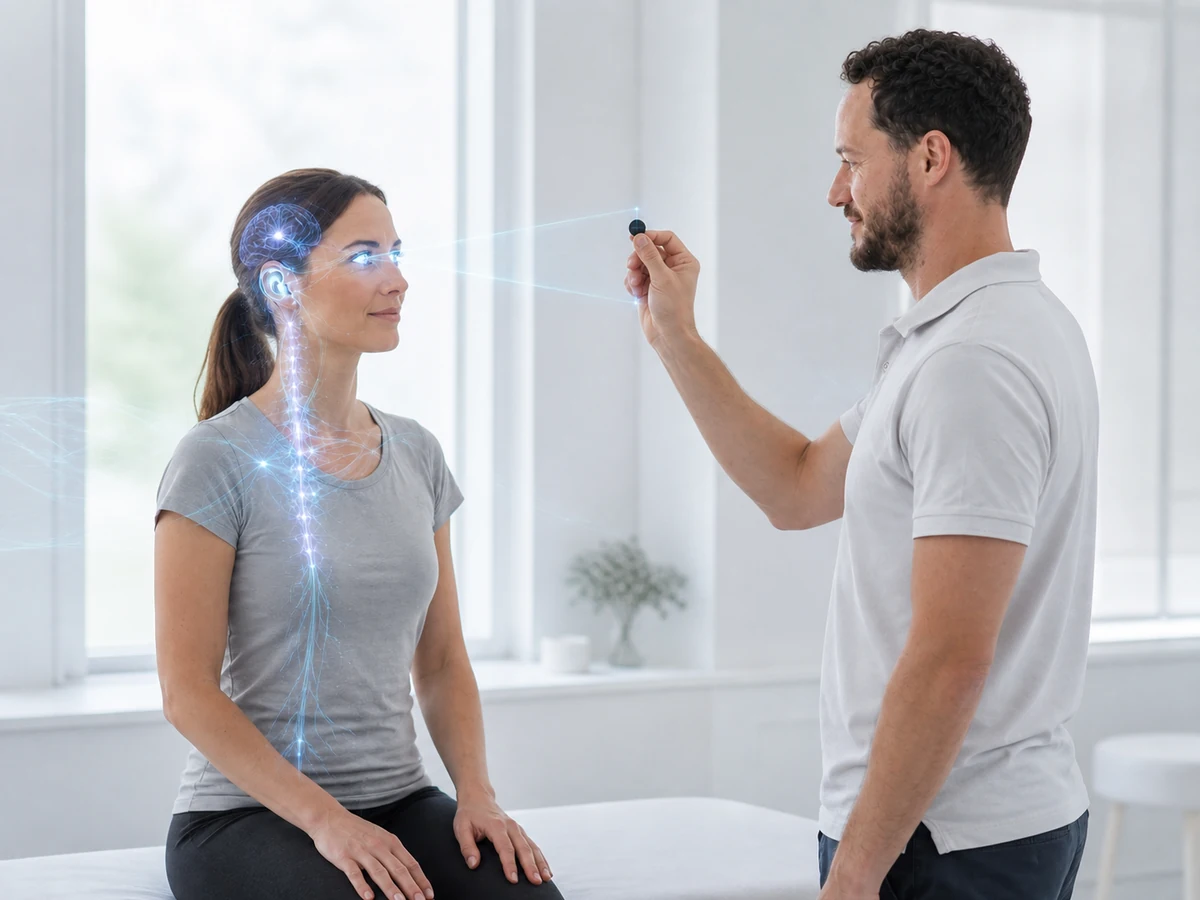 Example workflow
Exteroception at the eye: which visual input changes the response?
Exteroception at the eye: which visual input changes the response?
A suitable initial test — involving balance, mobility or coordination, for example — is first recorded reproducibly. Clearly dosed visual inputs are then assessed individually: a specific gaze direction, an area of the peripheral visual field, a near-to-far focus change or coordination between the two eyes.
If an input repeatedly produces an unusual change, we narrow down parameters such as the eye involved, direction, duration and intensity. We test a well-tolerated alternative input or suitable eye exercise, link it with the input that produced the unusual response and then reassess.
Reference testVisual inputNarrow down parametersTest a solutionIntegrationOverall comparison
 Example workflow
Migraine: functionally compare cranial inflow and outflow systems
Migraine: functionally compare cranial inflow and outflow systems
For migraine that has already been medically assessed, the functional comparison may include method-specific tests of cranial inflow and outflow systems alongside eye movements, the cervical spine, breathing and autonomic responses.
If a reference test shows a reproducibly unusual response to one of these inputs, we look step by step for suitable regulation. We then assess the initial input, possible solution and integration together — without inferring a single cause of migraine from one test response.
Starting pointCranial testsCompare the responseTest regulationIntegrationRetest
These sequences illustrate the approach. The order of tests, inputs and changes observed differ from person to person.
Immediate response and lasting integration
Why changes can appear quickly — and why integration still matters
The nervous system processes information continuously. A response to a targeted input may therefore change during a direct repeat test. The integration step follows to help turn a useful moment into a more robust response.
The nervous system responds immediately
A visual, vestibular, proprioceptive or other sensory input changes the information currently available. An immediately repeated reference test shows whether the function being assessed responds positively, negatively or not at all.
The solution is linked with the problem input
In neurofunctional integration, the suitable solution input is deliberately paired with the input that previously produced an unusual response. The intention is for the nervous system to access the new, physiologically more favourable response when it encounters that input again.
Unusual input→Suitable solution→Integration→Renewed demand→Overall comparison
An immediate improvement in a test is a useful indication for further work. How consistently a change appears in daily life is assessed over time, under renewed demands and through later repeat tests.
Neurocentric and neuroathletic training
Train specific neural functions
Neuroathletic training can be used beyond functional work with symptoms. During training, selected sensory and neural areas are deliberately activated to support movement, orientation, reaction and sporting performance.
Eye movement control
Saccades, smooth pursuit, near-to-far focus changes and coordination between the two eyes.
Gaze stability & balance
Control head movements and improve orientation while moving.
Joint and body awareness
Recognise positions more precisely and control movements with greater differentiation.
Peripheral vision & reaction
Notice relevant signals faster and respond appropriately.
Sport-specific decisions
Connect visual information, movement selection and timing more closely with the sport.
Targeted preparation
Prepare suitable neural areas before strength, technique or movement training.
Test–retest applies here too: An exercise is not used simply because it sounds ‘neuro’. It stays in the programme when it demonstrably improves the desired function in the comparison and is well tolerated.
More about neuroathletic training and performance
Clear context
Functional work complements medical diagnosis
Applied Neurofunction considers responses, capacity and the interaction between different functions. It does not provide a medical diagnosis or replace a medical examination or necessary treatment.
- Acute, new, severe or unexplained symptoms and warning signs should first be assessed medically.
- A functional test response shows a relationship under the chosen test conditions, but does not prove the cause of a disease.
- An immediate change in a retest offers an indication for further work, but is neither a promise of a cure nor evidence of a lasting effect.
- Existing findings and treatments are respected and can help define a useful scope for functional work.
A brief self-check
When this approach may interest you
You don't need to identify with a diagnosis. What matters more is whether you notice recurring functional patterns that have not yet been adequately explained or changed.
✓
Symptoms keep returning, despite extensive local treatment or training.
✓
Findings only partly explain your limitations or do not fully match what you experience.
✓
Your response varies significantly depending on exertion, surroundings, head position or visual demands.
✓
Movement, stability or performance feel blocked, even though strength and technique are fundamentally there.
✓
Your eyes, balance or body awareness seem to play a part in your symptoms or sport.
✓
You respond unusually strongly to small inputs or struggle to understand why a situation puts strain on your system.
✓
You want more than a collection of exercises, and would prefer to assess which intervention actually makes a difference for you first.
✓
You want to follow changes directly and compare them using the same tests.
Do several of these points sound familiar? A brief first conversation can help clarify whether a neurofunctional assessment could be useful for your question.
Your next step
Would you like to know whether my approach suits your situation?
In a free first phone conversation, you briefly describe your concerns. Together, we explore whether Applied Neurofunction could be useful for your question and what the next step might be.
- around 20 minutes
- free and without obligation
- personally with Tino Both
We first explore whether this approach suits your concerns; there are no blanket promises.
Development and professional influences
Many neuro-based systems — an individual approach
Today's neurofunctional work did not emerge from a single school. Different systems developed their own focus, testing logic and intervention methods. I combine the tools that can be assessed specifically for each question.
Neurofunctional integration developed by Dr Philip Eckardt
NeuroFI is the main pillar of my work. The system combines functional anatomy, targeted neurological tests and subsequent integration of unusual responses.
Visit Neurolog AkademieZ-Health Performance developed by Dr Eric Cobb
Z-Health has strongly shaped practical work with visual, vestibular and proprioceptive functions in training, combining assessment, targeted drills and immediate reassessment.
More about Z-HealthReceptor-based therapy developed by Daniel Müller
Taught since 2024, this approach focuses on sensory receptors, movement control and the principle of ‘input before output’, complementing functional assessment of the musculoskeletal system.
Explore the training conceptApplied Neurofunction
This is my name for an integrative approach that combines NeuroFI as the primary tool with elements of neuroathletic training, receptor-based and other neurocentric systems — always individual, guided by tests and without a rigid protocol.
The name of the system is not what matters. What matters is whether a test is understandable, an input suits the person and the change we find remains consistent when compared again.
Explore specific areas of focus
Where this approach is used
The focus pages offer detailed context on common concerns, the functional systems involved and the approach in each area.
01
Dizziness & balance
Consider orientation, standing stability, eye movements and balance from a functional perspective.
Explore this area → 02Vision difficulties & visual processing
Eye movement control, focus, visual strain and the interaction with movement.
Explore this area → 03Pain & functional symptoms
When symptoms, structure and responses to exertion do not fully align.
Explore this area → 04Complex symptoms & autonomic dysregulation
Understand fluctuating, exertion-related and post-infectious patterns in a differentiated way.
Explore this area → 05Neuroathletic training & performance
Train perception, reaction, gaze stability and movement control in a targeted way.
Explore this area → 06Children's concentration & learning
Consider perception, eye movement control, regulation and learning demands together.
Explore this area →Common questions
Brief explanations
Answers to common questions about neuroathletic training, Applied Neurofunction, assessment and integration.
What is the difference between neuroathletic training and Applied Neurofunction?
Neuroathletic training mainly works with trainable visual, vestibular, proprioceptive and motor functions. Applied Neurofunction is my broader term for combining different neurocentric systems individually. Neurofunctional integration is my primary tool within that approach.
What happens at the first appointment?
After discussing your history, we may carry out neurofunctional screening, depending on your concerns. We assess specific functions that show a difficulty, directly test possible solution inputs, integrate them and finally compare the results with the initial tests.
Do I need to be sporty to do neurofunctional work?
No. Reference tests are adapted to your current capacity and goals. They may involve simple movements, perception tasks, balance tests or other easily reproducible functions.
Is muscle testing the main assessment tool?
No. A muscle test can be used as an additional feedback tool, but is not essential. Mobility, balance, coordination, perception or other functional tests can also be used.
What does ‘integration’ or ‘encoding’ mean?
I use these terms for the step in which an input that previously produced an unusual response is deliberately linked with a suitable solution. The intention is for the nervous system to access a more favourable response when it encounters the input again. The original test is then repeated.
Can a response really change immediately?
Yes, a change can become apparent immediately in a direct retest because the nervous system processes information continuously. Whether it remains consistent and transfers to everyday life is assessed through integration, exertion and later repeat tests.
How many appointments are needed?
That cannot be responsibly determined before the first assessment. The number and spacing depend on the question, starting point, response and course of progress after the first appointment.
Do I need a medical diagnosis beforehand?
Not for every functional question. However, new, severe, acute or unexplained symptoms and medical warning signs must first be assessed by a doctor. You are welcome to bring any existing findings.
Is your question missing? We can discuss it in a free first conversation.