

Distinguishing perception and movement
Changing direction requires more than leg strength: a signal is perceived, linked to a direction and connected with movement. I compare individual demands and then their combination in the sporting task.
Neuroathletik Bayern · My sports offering
What does a controlled change of direction on a cue require? This example shows how I assess perception and movement and connect them with your sport.
AI illustrations · no real client scenes.
One example · five steps
 Initial task
Step 01
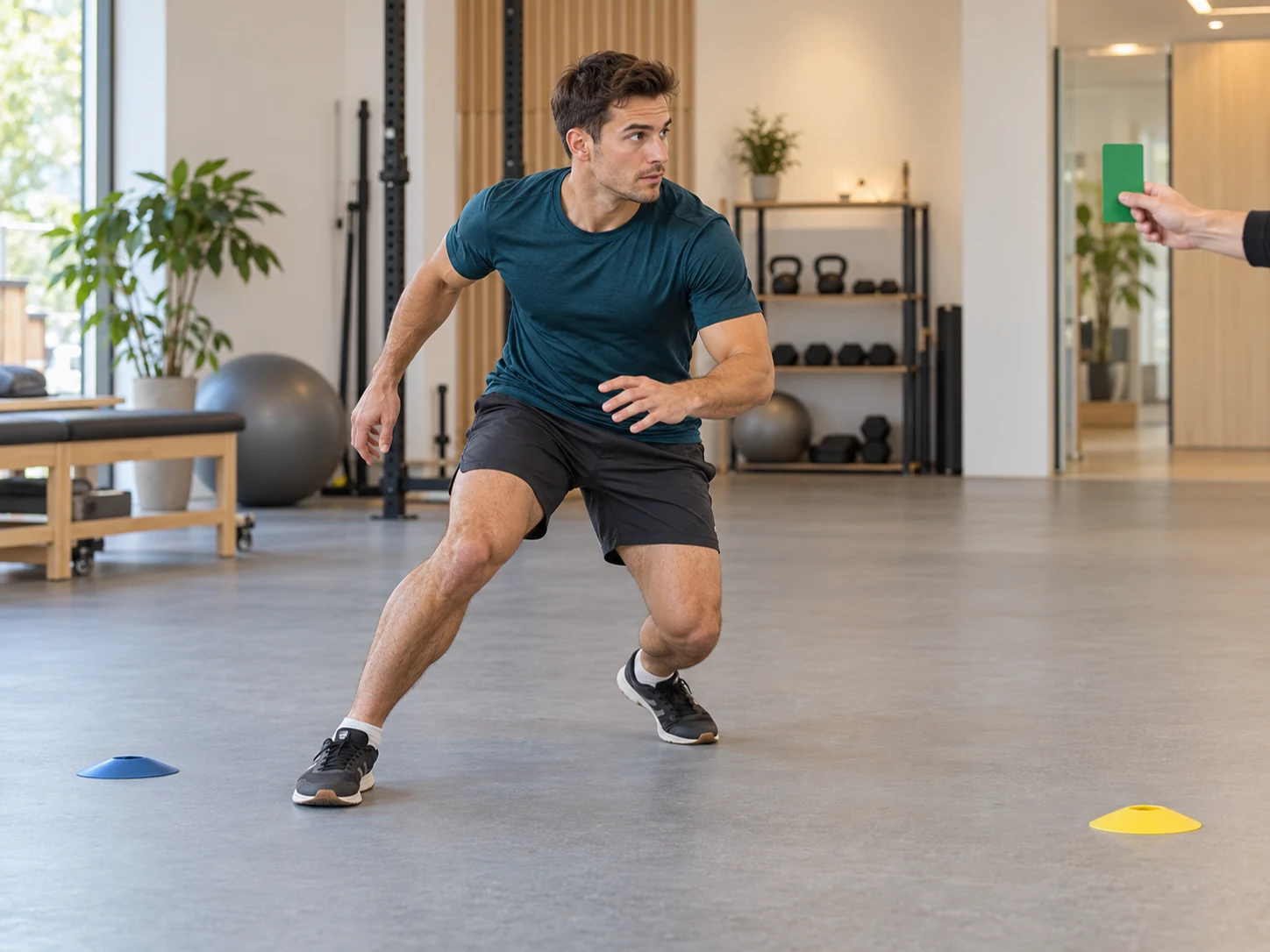
We choose a change of direction in response to a signal. Where does the sequence falter: recognising the signal, braking or accelerating again?
Step 02
We break the sporting task into manageable demands:
First separately, then together: what changes with an additional signal or more speed?
Step 03
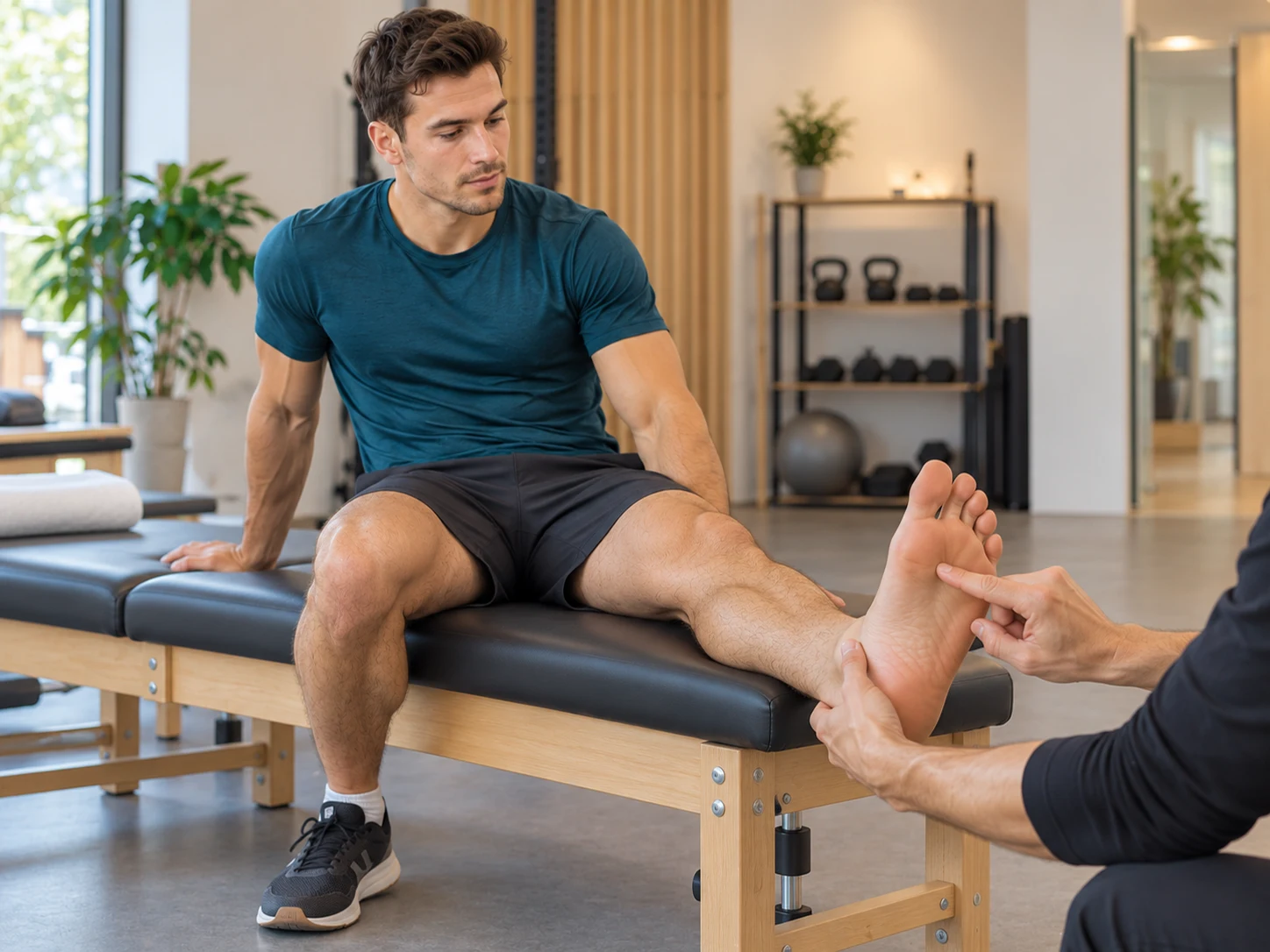
In this example foot pressure sensation and ankle position under load stand out. I compare the response to a targeted tactile stimulus on the sole.
An example selected to match the findings.
04 / 05
I connect a helpful response with the particular function that was difficult. The signal, braking movement and direction change are then brought together again.
05 / 05
The same signal, direction and a comparable pace: we compare the response, braking control and movement flow.
Step 04
In a free first conversation by telephone, we discuss your sport, your goals and the specific movement you would like to work on. Together, we consider a suitable starting point.
In-person appointments: Allinger Straße 18, 94474 Vilshofen an der Donau.
Arrange a free first conversationExplore further
The example shows one possible approach. Explore the functions, other situations and common questions below.
When strength, technique and fitness are already in place, perception, orientation, response selection and movement control may still limit sporting performance. The Z-Health approach makes these factors assessable.
Changing direction requires more than leg strength: a signal is perceived, linked to a direction and connected with movement. I compare individual demands and then their combination in the sporting task.
This example focuses on foot pressure sensation and ankle position under load. A tactile stimulus on the sole is one possible targeted intervention, with its response assessed in the same functional comparison.
A helpful response is connected with the particular function that was difficult. The same direction change is then repeated. A change in this comparison is initially an observation in that task; robust sporting performance also depends on transfer under appropriate training conditions.
My sports offering · Neuroathletik Bayern
You can now find my personal support for athletes, teams and clubs at Neuroathletik Bayern. There you can learn more about working together, the process and appointment options.
You are moving to my sports website: neuroathletik-bayern.de ↗
When training does not reliably translate into performance
In recreational, amateur and competitive sport, I start with the particular ability you want to access more quickly, precisely, powerfully or consistently.
Strength, technique and fitness work are in place, yet progress does not follow or varies considerably between sessions.
The movement works without an opponent or time pressure. In competition, gaze, timing, decisions or technique become unreliable.
One direction feels slower, weaker or less accurate. More repetitions alone do not resolve the difference.
The ball, opponent or signal is seen, but selecting a response, starting and moving do not connect quickly enough.
As speed increases, gaze control, trunk stability, rhythm or target accuracy lose quality first.
Strength and mobility have returned, but landing, braking, changing direction or a challenge still do not feel free again.
Performance begins before movement
A visible technical or strength error may originate earlier in the performance sequence. This is why the sporting output is broken down into individual demands that can be assessed.
The ball, opponent, target, ground, joint position, speed and body position need to be perceived in time and with sufficient accuracy.
The nervous system selects the appropriate response from several possibilities, inhibits unsuitable responses and organises timing.
Eyes, head, spine and joints create a resilient starting position so that the planned movement does not lose energy before it is executed.
Strength, speed, precision and endurance are transferred into the complete sporting skill, from jumping to changing direction.
Assess more broadly
Sprint time, jump height, hit rate, changing direction or a specific return-to-play task provide the starting point. We then assess which part of processing is currently limiting the output.
Fixation, saccades, smooth pursuit, peripheral awareness and quiet eye are assessed in relation to the ball, opponent, target and movement speed.
Gaze stability during head movement, VOR, VORC, spatial orientation and sensory weighting show how steadily movement is organised despite dynamic demands.
Joint position, target accuracy, foot and ankle information and awareness of individual body segments are compared precisely.
Rapid alternating movements, rhythm, target movements and differences between sides provide clues about where movement sequences lose precision.
Simple and complex response selection, Go/No-Go tasks, inhibition, attention and dual task make the decision before the movement visible.
Angle-specific strength, grading force, jumping, sprinting, braking, changing direction and the actual sporting skill are assessed under standardised conditions.
The crucial comparison stays the same: The same sporting output is assessed before and after a targeted drill under conditions that are as identical as possible. This immediately shows which input improves performance and which is not pursued further.
The neuroathletic approach
Dr Eric Cobb developed Z-Health as a neurocentric training system. Rather than assuming that every athlete needs the same correction, it centres on direct assessment: Which sensory or motor input improves the particular sporting output we want?
The eight levels provide a map. They help connect perception, pathways, central processing and movement. The search does not rigidly follow levels one to eight; it follows the individual's performance difficulty.
Vision, balance, touch, joint position and other sensory information.
Pathways, freedom of movement and neural functions under load.
Reflexes, sensory pathways, baseline tension and rapid connections.
Timing, target accuracy, rapid alternating movements and error correction.
Gaze stability, posture, orientation and basic movement organisation.
Filtering and relaying relevant sensory information.
Internal body awareness, perceived effort and state regulation.
Planning, decisions, attention, complex movement and sporting skills.
A relevant sporting task is defined so it can be reproduced.
The likely contributing functions are assessed individually.
A specific exercise is selected with a defined side, direction and dose.
Exactly the same performance task is repeated immediately.
The successful drill is integrated into the warm-up, training or sporting skill.
Active interventions
In the Z-Health approach, the intervention mainly consists of targeted exercises. Depending on the findings, athletes may work with eye movements, head movements, joint positions, rhythm, reaction rules or a modified execution of their sporting movement.
The most spectacular exercise is not the winner. The useful drill is the one that immediately and reproducibly improves the previously defined performance output.
Fixation, saccades, smooth pursuit, peripheral cues and quiet-eye drills, tailored to the target, direction, distance and sporting task.
Gaze stabilisation during head movement, VOR and VORC variations, tilt, acceleration and spatial orientation.
Joint-position drills, sensory inputs and precise target movements improve the available information about the body.
Rapid alternating movements, graded speeds, changes of rhythm and multi-part movement sequences.
Colour, number or direction signals, Go/No-Go tasks, peripheral cues and sport-specific decision drills.
Acceleration, jumping, braking, changing direction or throwing are modified specifically and checked immediately against the relevant output.
Precise rather than general: Side, direction, speed, distance, target size, starting position, duration and number of repetitions are selected so that the drill fits the athlete and the current task.
Three specific application scenarios
We begin with a specific sporting task. I assess the relevant functions and select a suitable drill. We then repeat the same task under comparable conditions. We incorporate a helpful approach into your warm-up or sports training.
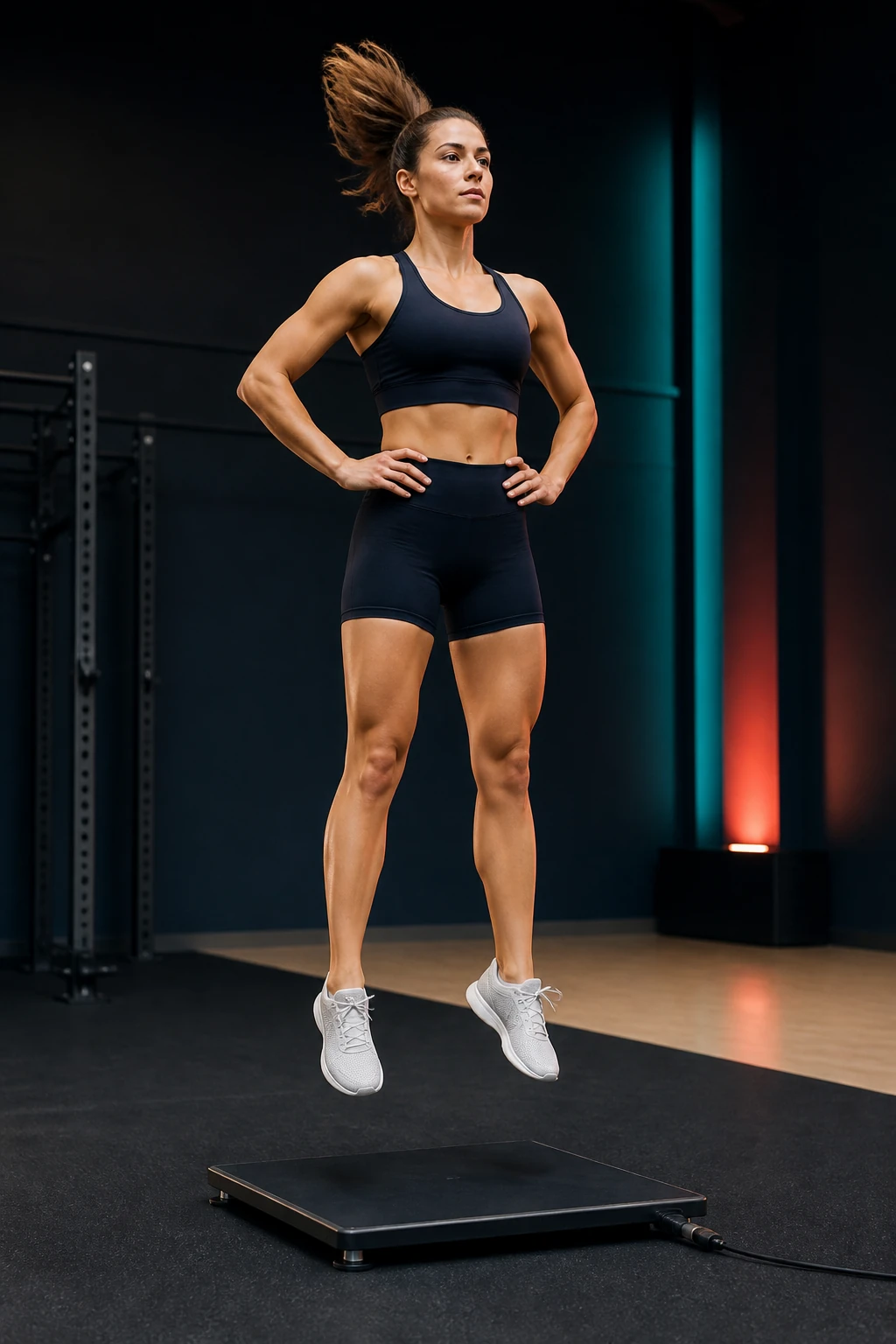
More strength training does not automatically produce more height. What matters is whether the available output can be accessed at the right angle, with appropriate timing and sufficiently precise body information.
Three standardised countermovement jumps with the same arm position; jump height, take-off and landing are recorded comparably.
Angle-specific isometrics, grading force, ankle and hip position, target accuracy, gaze direction and balance organisation are assessed separately.
A function that stands out is combined with a suitable exercise, such as precise joint positioning or an eye/head stability drill that showed a positive test response.
The same jump test immediately shows whether height, take-off organisation or landing benefit from this input.
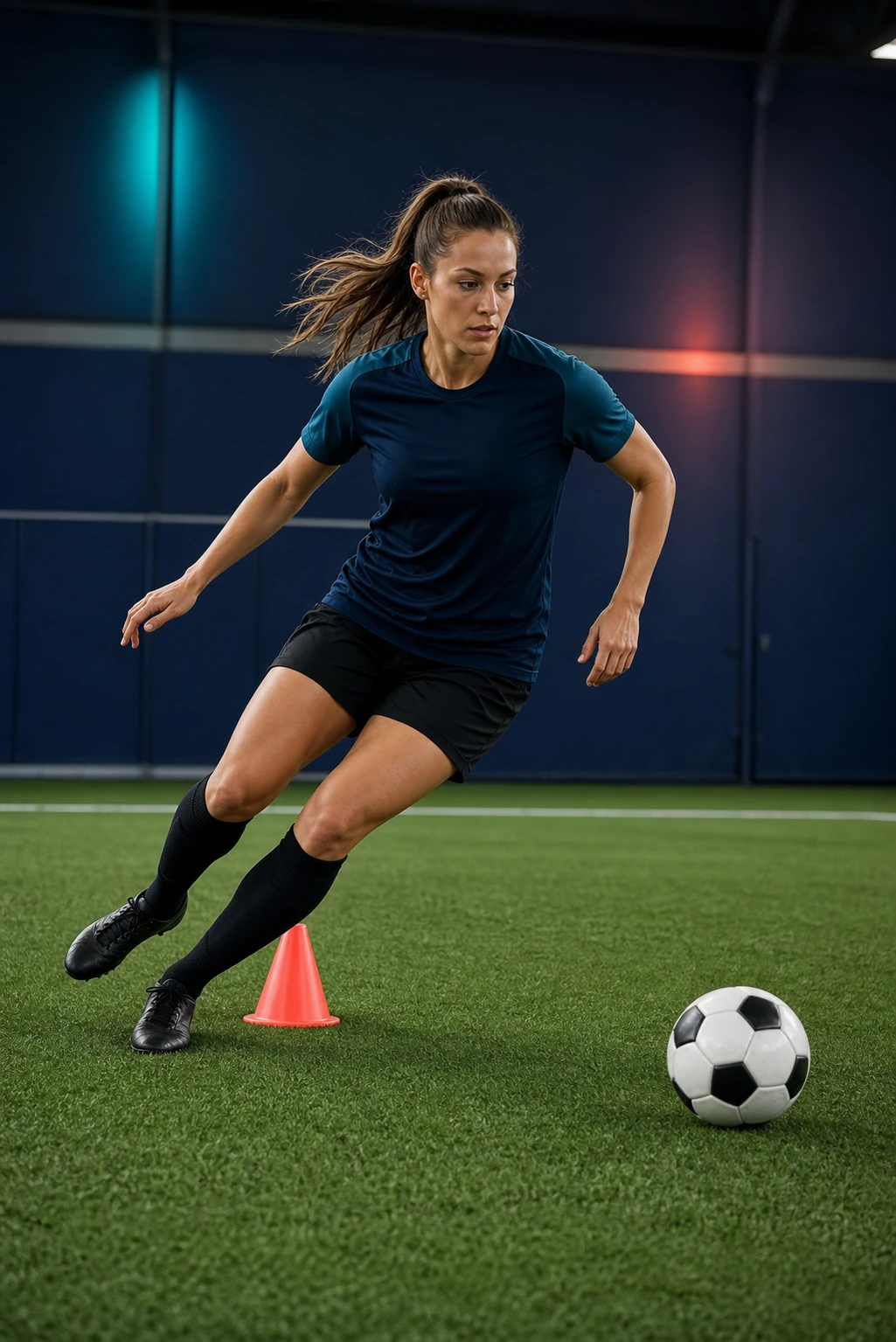
In a match, a change of direction does not begin in the leg. The ball, opponent, space and signal need to be recognised, filtered and translated into the right response.
A defined approach with a signal, ball and change of direction; time, decision errors, ball control and braking are recorded.
Saccades, peripheral recognition, quiet eye, gaze stability during head movement, Go/No-Go and choice reactions are examined individually.
A function that stands out is trained specifically, for example a peripheral cue combined with a direction decision or precise saccades to targets relevant to play.
The same course shows whether perception, decision and movement now work together more quickly and with fewer errors.

After medical clearance, strength and mobility may have returned while reactive landings, head movements or unplanned decisions still create uncertainty.
A single-leg landing or lateral jump followed by a direction cue; control, reaction time, braking distance and perceived confidence are compared.
Joint position sense, single-leg stance with head movement, gaze stability, braking strategy, response selection and load under distraction are assessed separately.
The function that stands out receives a specific progression, such as a joint-position target, gaze stabilisation and then a reactive landing with an external signal.
The original task shows whether movement control, decisions and confidence can again be accessed together.
Return to play
Returning to sport does not end with freedom from pain, mobility or an isolated strength measure. Competition simultaneously adds gaze control, head movement, rapid orientation, opponent pressure, fatigue and unplanned decisions.
After medical clearance, neuroathletic training can make the gap between Return to play and return to performance visible and trainable.
Strength, mobility and basic load tolerance provide the foundation.
Braking, landing, accelerating and changing direction are assessed precisely.
Gaze, head movement, balance and body mapping are included in the task.
External signals, Go/No-Go, opponents and unplanned options increase the demands.
Sporting skill, speed, density of effort and fatigue approach competition conditions.
For athletes at every level
Neuroathletic training can be useful for people who want to understand their sport more precisely and improve a specific output, from committed recreational participants to competitive and elite athletes.
Access movements more reliably, learn technique more easily and remain consistent even when fatigued.
For people with training experience whose speed, precision or consistency are not developing accordingly.
Measure sport-specific details, speed up decisions and make performance available under competitive pressure.
A runner needs different visual, vestibular and proprioceptive strategies from a goalkeeper, strength athlete or martial artist. Neither the assessment nor the drill is therefore selected off the shelf.
Grading force, angles, joint position, breathing, jumping and explosiveness.
Peripheral vision, saccades, response selection, braking and changes of direction.
Rhythm, head and gaze stability, foot mapping, technique and efficiency.
Distance, anticipation, quiet eye, inhibition, timing and rapid target selection.
We begin with your specific sporting task and assess which function makes the greatest difference to speed, precision, stability or return to performance.
FAQ
Z-Health is a neurocentric training approach that considers sporting performance through the interaction of perception, central processing and movement. A specific sporting task is assessed, a suitable drill is selected and the task is then re-tested under the same conditions.
Yes. We work on your specific goal, such as aiming more accurately or regaining trust in a sporting movement after injury.
Depending on the goal, visual functions, balance and head movement, joint position sense, coordination, response selection, angle-specific strength, sprinting, jumping, braking or a sport-specific skill may be assessed.
Drills are not assigned generally. An exercise is assessed with a defined side, direction, speed, distance and dose. If it improves the previously defined sporting output, it is developed further and transferred into training.
Conventional athletic training develops strength, endurance, speed and technique, among other qualities. Neuroathletic training complements this by asking how well the nervous system receives and processes relevant information and makes it available in that particular sporting situation.
Yes. Improving performance is a goal in its own right. The approach becomes particularly relevant when progress stalls despite good training, performance varies under pressure or a sporting skill cannot be accessed reliably.
After medical clearance, orientation, reactive control, eye and head movement and decisions under sport-specific conditions are developed alongside strength and load tolerance. Progression ranges from controlled tasks to sporting skills close to competition demands.
If a drill proves useful in testing and re-testing, it is prepared so it can be used correctly in the warm-up, as a dedicated training block or immediately before a sporting skill. Progression follows your goal and tolerance.
Further reading
The linked articles explore training, visual performance, individual sports and return to play in more detail.