

← All articles
Professional development and events
Neurobiomechanics at the Olympic training centre – my training experience
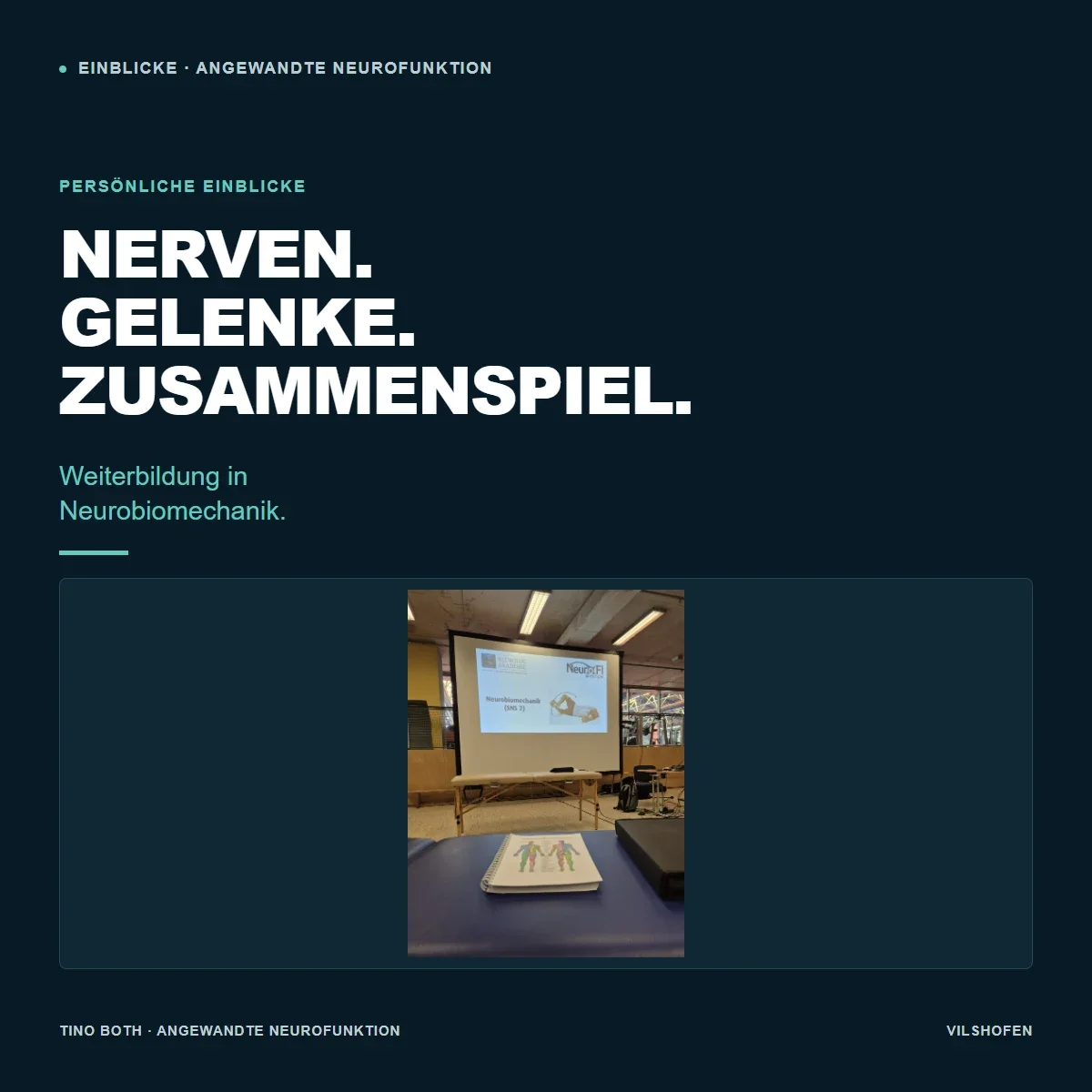
Briefly explained: From 19 to 22 March 2025, I deepened my knowledge of neurobiomechanics at the Munich Olympic training centre. Dr. Philip Eckardt’s course focused on functional relationships between nerves, joints and movement.
Would you like to understand why a movement remains difficult despite training?In the free initial telephone consultation, you describe your situation and what matters to you. Together, we clarify whether my Angewandte Neurofunktion in Vilshofen could be a sensible next step for you.
Arrange a free initial telephone consultation →
Arrange a free initial telephone consultation →
Four intensive days in Munich
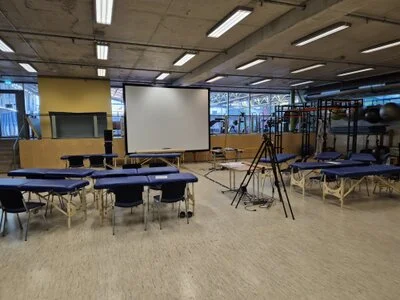
From 19 to 22 March 2025, I attended the neurobiomechanics course led by Dr. med. Philip Eckardt at the Munich Olympic training centre. The Werner-von-Linde-Halle at the Olympic Park was a fitting place to explore movement and functional relationships further.
Nerves are more than wires in a diagram
The course addressed peripheral nerves, movement patterns and joint mechanics, among other things. A change of position can alter mechanical demands along a nerve’s course. Such relationships were practically compared within the course’s functional assessment system.
We also explored stepping, rotation and jaw patterns, and which starting assessment and re-test fit a specific intervention.
When functions are little used in everyday life
Another topic was ‘learned non-use’. The term comes from neurorehabilitation and describes learned lack of use; it should not be indiscriminately equated with every movement that is practised little.
For my daily work, I was particularly interested in considering use, experience and current possibilities together: which function is avoided, what is actually possible and how can a suitable task become accessible again?
What I personally take away
I deepened my knowledge of peripheral nerves and their practical relationships, discovered additional assessment routes and brought new questions into work with clients.
The training also reinforced my decision at the time to begin training as a Heilpraktiker, a German alternative practitioner. This does not equate to an already granted Heilpraktiker licence. Above all, I take away the commitment to assess functional relationships more precisely and understandably.
Related pages and articles
Continue readingNeuroathletic training in Lower Bavaria: athletes, clubs, coaches
Help with pain: Angewandte Neurofunktion Vilshofen
My approach
Help with pain: Angewandte Neurofunktion Vilshofen
My approach
Discuss your concern personallyIf these topics resonate with you or you are planning a comparable service, we can discuss it.
Request your free initial telephone consultation here →
Request your free initial telephone consultation here →

Sources and further links
- Neurobiomechanics at the Neurolog Akademie: https://neurolog.de/de/kursprogramm-de/details/neurobiomechanik