

← All articles
Professional development and events
Physiotherapy Day 2025 in Ortenburg: my workshop reflection
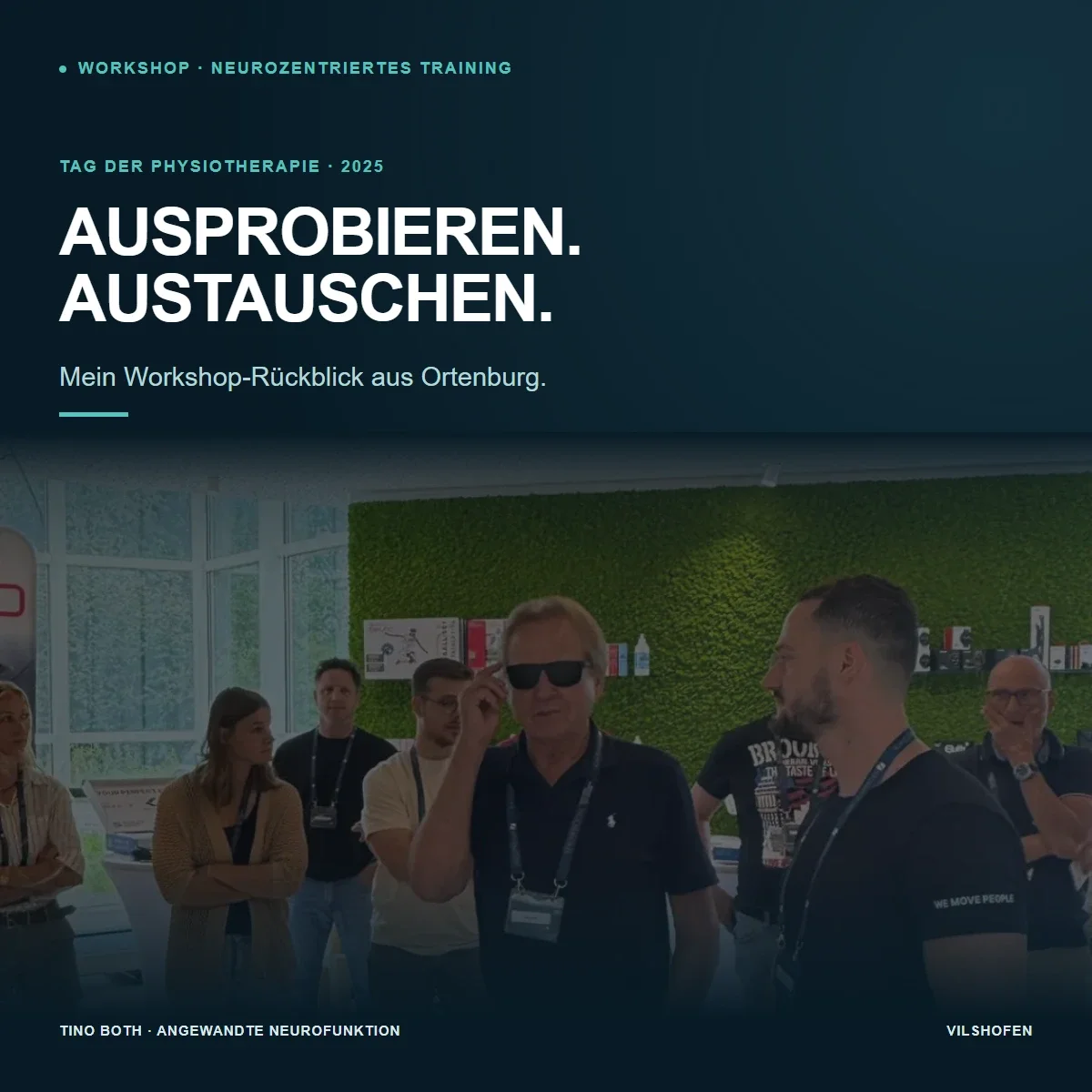
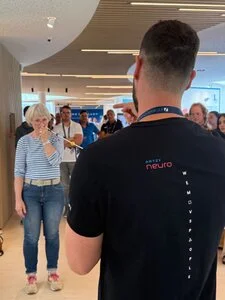
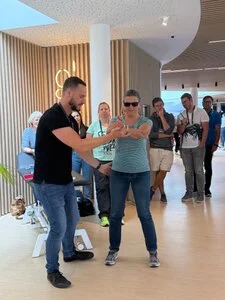
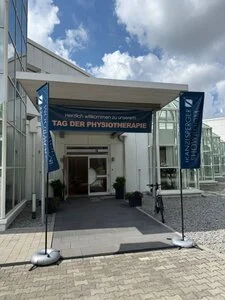
Briefly explained: At Physiotherapy Day on 12 July 2025 in the Kanzlsperger showroom in Ortenburg, I had the opportunity to lead a hands-on workshop on neurocentric training. Supported by the ARTZT Institute, the focus was practical experience, suitable tests and exchange between different professional groups.
Would you like a practical introduction to neurocentric work?Perhaps you seek a fresh view of your own movement task or want to explore the subject with your team. In the free initial consultation, we can discuss whether personal support or a course fits.
Discuss personal application or team training →
Discuss personal application or team training →
A day for practice and new perspectives
On 12 July 2025, professionals from different fields gathered in the Kanzlsperger showroom. The aim was to discover developments in physiotherapy, try practical approaches and exchange ideas beyond one’s own daily work.
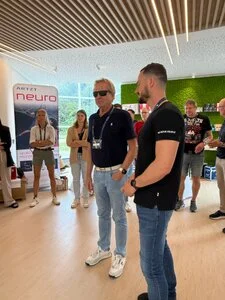
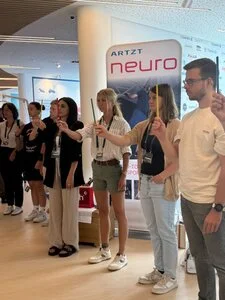
I encountered much curiosity in my workshop: how can visual information, balance and body perception be specifically included in movement and training? What do we observe after a selected stimulus? And how can an immediate response inform a sensible next decision?
My hands-on workshop: compare rather than simply demonstrate
A practical demonstration becomes helpful when the starting situation is clear. That is why I am interested in more than the exercise itself. I want to know which task was difficult beforehand and what changes afterwards under comparable conditions.
Three questions for transfer into everyday practiceWhat do we want to assess? A specific movement or function is more informative than the general wish for ‘more stability’.
What do we change? A selected visual, vestibular or body-related demand is deliberately adjusted.
What stays the same in the post-test? Only a comparable starting task makes the difference understandable. A short-term effect then becomes the beginning of further assessment and application.
What do we change? A selected visual, vestibular or body-related demand is deliberately adjusted.
What stays the same in the post-test? Only a comparable starting task makes the difference understandable. A short-term effect then becomes the beginning of further assessment and application.
Questions from physiotherapy, occupational therapy, coaching and other fields made the exchange particularly interesting. Different experiences help reconsider familiar tasks and recognise the limits of a single observation too.
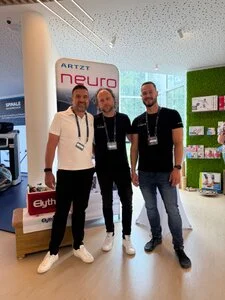
Conversations at the ARTZT Neuro stand
At the ARTZT Neuro stand, I had the opportunity to introduce various aids and explain their use, from gaze stabilisation tasks to body-related sensory stimuli. Direct exchange was particularly valuable to me because it generated very specific questions from daily practice.
The goal determines the selectionA tool is one way to shape a stimulus or task. What remains decisive is what it is used for, how the person responds and whether it usefully supports the relevant function.
Ideas from professional sport and physiotherapy
The talks by Christian Haser and Klaus Eder were another highlight for me. Their insights into organisation in professional football and the development of physiotherapy showed the importance of experience, structure and professional exchange.
Events like this offer more than new ideas. They also provide opportunities to ask questions, encounter different perspectives and explain your own approach more precisely.
Thank you to everyone who made the day possible
My thanks go to the whole Kanzlsperger team, especially Anita Cermakova, for organising the event. Thanks to Astrid Büscher from ARTZT Neuro for the connection and opportunity to participate, and to Felix Artzt and Mira for support on site.
Thanks also to the participants for their curiosity, questions and shared experimentation. This exchange is exactly what brings a hands-on format to life.
What followed afterwards
The event day was followed in September 2025 by a more detailed course on neurocentric training and therapy in Ortenburg. You can find more about the content and practical experiences in the reflection on the September 2025 course.
Do you have a specific question for yourself or your team?Let us build on that. In my work with Angewandte Neurofunktion in Vilshofen, the focus is an understandable route from the concern to suitable assessment and the next step, rather than the largest possible exercise collection.
Discuss your concern in the initial consultation →
Discuss your concern in the initial consultation →
Related pages and articles
Further exploration and eventsNeurocentric training & therapy – two days that change perspectives - September 2025
Announcement: Therapy Day 2026 in Ortenburg – neurocentric training with Tino Both
Announcement: Therapy Day 2026 in Ortenburg – neurocentric training with Tino Both
Get to know the functional perspectiveReceptor-based therapy according to Daniel Müller – what I took from the seminar for my work
VOR explained simply – why the vestibulo-ocular reflex keeps gaze stable
VOR explained simply – why the vestibulo-ocular reflex keeps gaze stable
My approach and your next stepAngewandte Neurofunktion: how I work
My professional journey and areas of focus
Free initial telephone consultation
My professional journey and areas of focus
Free initial telephone consultation
Sources and further links
- Kanzlsperger showroom: https://showroom.kanzlsperger.de/
- ARTZT neuro: https://artztneuro.com/