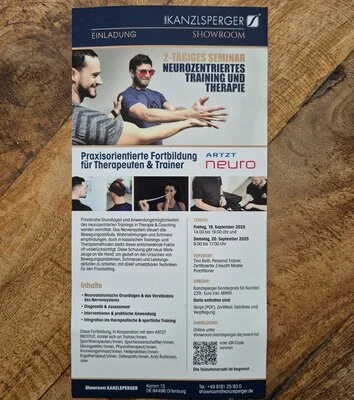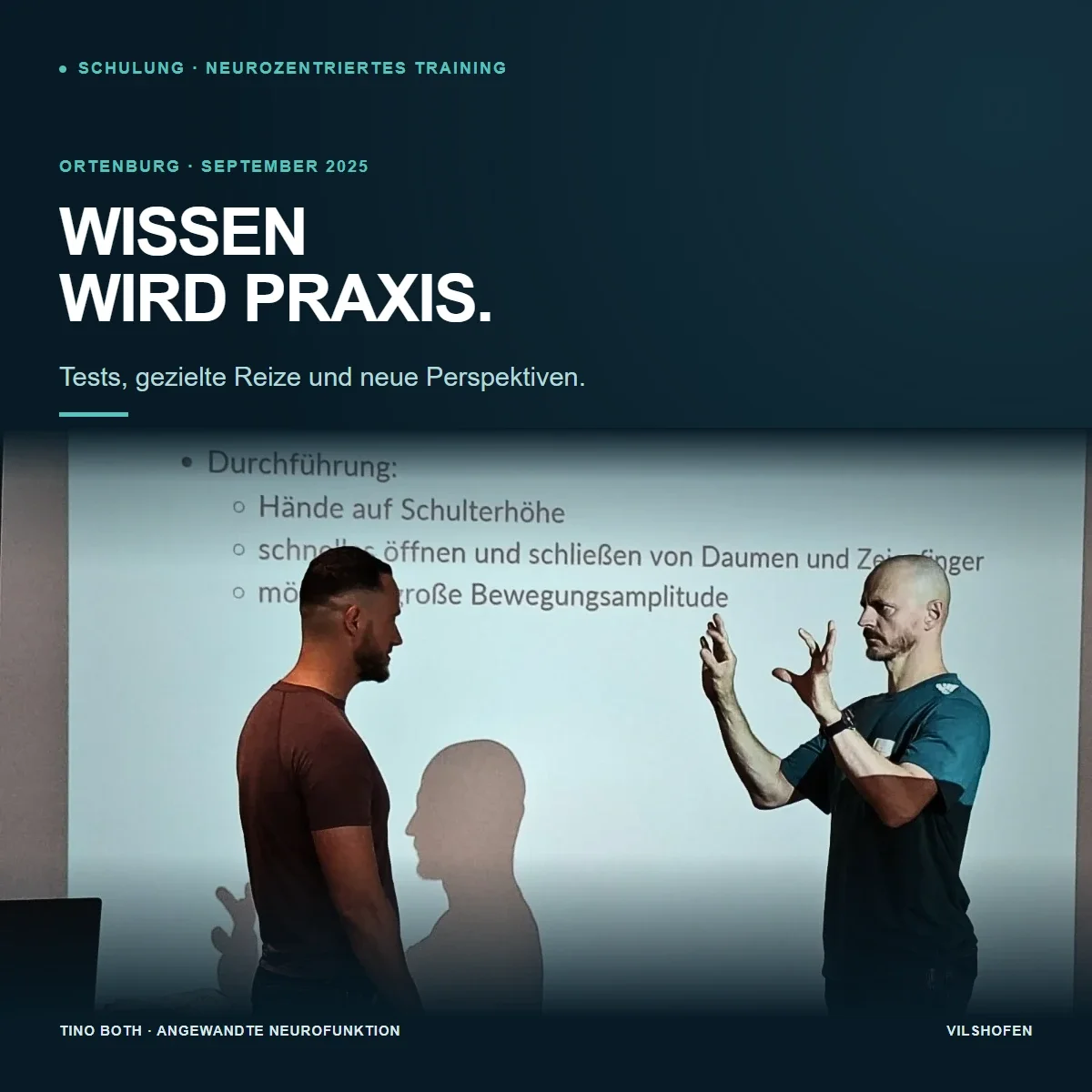
Briefly explained: The September 2025 course in Ortenburg focused on making neurocentric training practically understandable: assess a starting function, apply a targeted stimulus and compare the same function again. The 1.5-day workshop combined fundamentals, practical tests and discussion about transferring them into training and therapy.
Would you like to get to know this approach yourself or bring it to your team?Whether personal support or training for your team: write to me about the questions from everyday practice that matter most. We can then discuss which format suits you.
Get to know neurocentric work – arrange an initial consultation →
The initial telephone consultation is free.
Get to know neurocentric work – arrange an initial consultation →
The initial telephone consultation is free.
A shared starting point: how do we recognise a helpful stimulus?
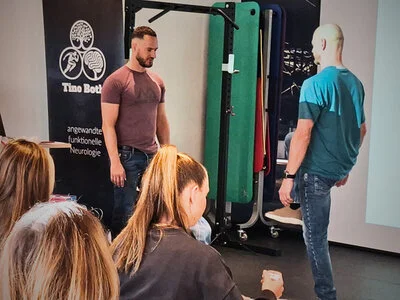
An exercise can be demonstrated quickly. Deciding whom it suits and in which situation is harder. This is exactly where the course began: how do we choose a suitable starting test? What do we change afterwards? And how can we recognise whether the task then becomes easier, unchanged or harder to perform?
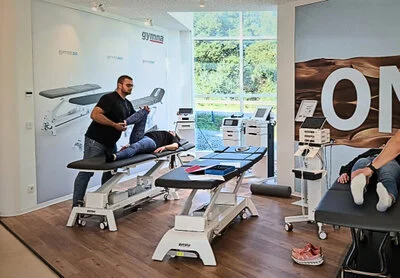
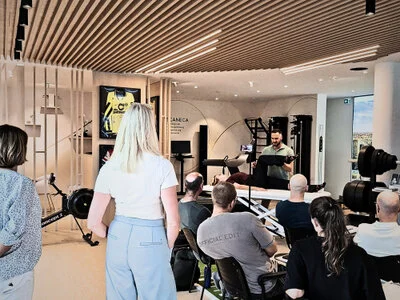
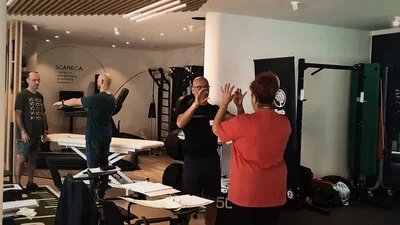
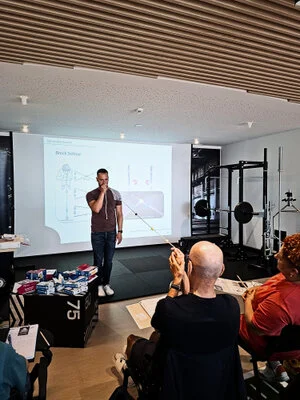
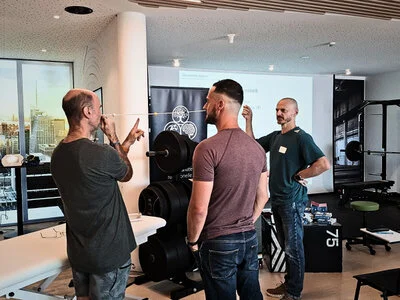
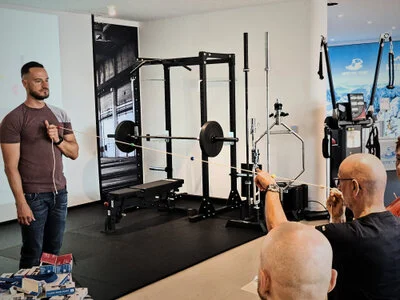
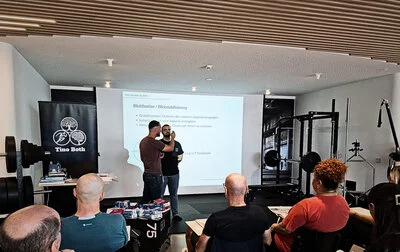
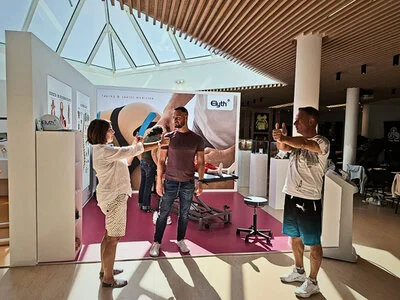
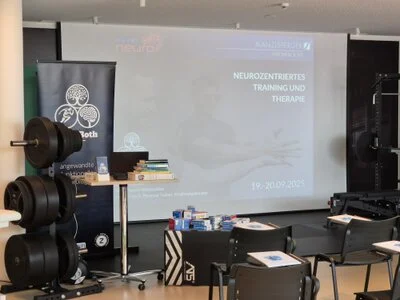
The showroom of Kanzlsperger GmbH in Ortenburg provided a suitable setting. Bright rooms, practical equipment and warm hospitality with drinks and snacks created space for focused learning and many personal experiences.
The content: from understanding to practical decision
1. Make neurology understandableInput, processing and output were the guiding thread: which information arrives, how is it processed and which movement or response do we observe? This included the prediction principle and fundamentals of functional neuroanatomy. The aim was an understandable introduction on which practical work could build.
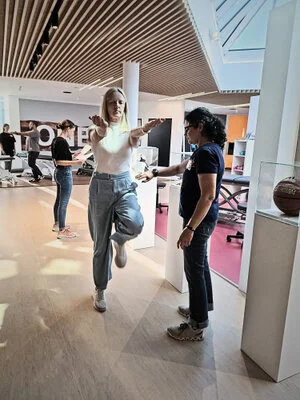
2. Create a meaningful comparisonWe explored range of movement, gait, muscle tests, coordination tasks and reflexive stability. Selected tasks for eyes and balance were added, such as convergence and gaze stabilisation. The aim was not to collect as many tests as possible, but choose a comparison suited to the question.
Pre-test → targeted stimulus → same post-test. Only the repeated comparison shows whether the selected variation appears immediately helpful for this task.
Pre-test → targeted stimulus → same post-test. Only the repeated comparison shows whether the selected variation appears immediately helpful for this task.
3. Distinguish body perception, balance and visionProprioception: Information from muscles and joints and perception of position and movement.
Vestibular system: Tasks involving balance, head movement and spatial orientation.
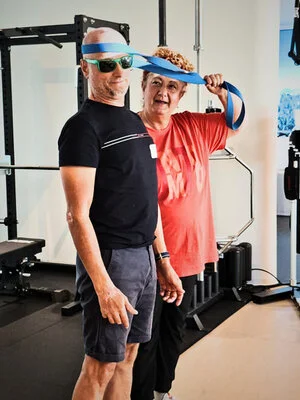
Visual system: Gaze tasks and different visual conditions, including trials with red and blue glasses.
Vestibular system: Tasks involving balance, head movement and spatial orientation.
Visual system: Gaze tasks and different visual conditions, including trials with red and blue glasses.
4. An introduction to neurofunctional integrationAnother section introduced neurofunctional integration according to Dr. Philip Eckardt. It explained the targeted search for a stimulus combination under which a previously unusual test response can change. Such integration and the subsequent selection of a training stimulus are different work steps.
5. Try different practical approachesBreathing tasks, exercises involving several sensory systems simultaneously and neuromechanical movements supplemented the programme. The individual response remained decisive here too. A more demanding exercise is not automatically more suitable.
Moments of insight: when a small change shows up in comparison
I particularly remember one participant in whom several previously tested tasks appeared more favourable after ankle mobilisation exercises. We also observed short-term changes in movement coordination during trials with red and blue glasses.
The interesting part is not the aid aloneThese observations do not mean ‘everyone needs ankle exercises’ or ‘these glasses improve all coordination’. What is interesting is the specific comparison: which task changes in this person under this condition? This is exactly how the next sensible question emerges.
The immediate differences made the theory tangible. Whether a change remains in everyday life only becomes visible through further comparisons and application. For the workshop, the observations were a good starting point for discussing selection, dose and repeatability.
What participants took away
Feedback described the approach and practical experiences as exciting and highly interesting. The possibility of directly comparing changes attracted particular interest. At the same time, the high density of information required much concentration; with a complex subject, the question of a clear guiding thread always belongs in the discussion.
For me, the next step is especially valuable: what can be applied in your own working day? Which tasks can be compared well, and where is more practice or further differentiation needed? I look forward to this exchange.
Thank you for organisation, equipment and exchange
Heartfelt thanks to the Kanzlsperger GmbH team, especially Anita Cermakova, for organising and supporting the event on site. Thanks also to Astrid Büscher and ARTZT Neuro for bringing us together, organisation and the equipment supplied.
And thank you to all participants for their questions, experimentation and openness to considering familiar movement and training tasks from another perspective.
From an interesting exercise to an understandable approachThis also matters to me in my current work with Angewandte Neurofunktion: you should understand what we assess and why a particular next step follows. In the initial consultation, we can clarify how this approach might fit your own situation or training for your team.
Discuss your concern with me →
Discuss your concern with me →
Related pages and articles
Further insights into coursesNeurocentric training – looking back at Physiotherapy Day in Ortenburg
Announcement: Therapy Day 2026 in Ortenburg – neurocentric training with Tino Both
Announcement: Therapy Day 2026 in Ortenburg – neurocentric training with Tino Both
Explore the approach furtherFunctionally assessing eye movements – why an indicator muscle shows more than observation alone
VOR explained simply – why the vestibulo-ocular reflex keeps gaze stable
VOR explained simply – why the vestibulo-ocular reflex keeps gaze stable
My approach and your next stepAngewandte Neurofunktion: how I work
My professional journey and areas of focus
Free initial telephone consultation
My professional journey and areas of focus
Free initial telephone consultation