Neuroathletic training for athletes and clubs in Lower Bavaria
When strength, endurance and technique have been trained — but reaction, stability or trust in movement are still missing.
Neuroathletic training considers sporting performance from the nervous system's perspective. Before a muscle produces force, your system needs to receive information, process it and control movement precisely.
My sports offering · Neuroathletik Bayern
Your sport. Your nervous system.
You can now find my personal support for athletes, teams and clubs at Neuroathletik Bayern. There you can learn more about working together, the process and appointment options.
You are moving to my sports website: neuroathletik-bayern.de ↗
Do you recognise this from training or competition?
Sometimes the performance limit lies in perception, reaction and movement control rather than strength.
The reaction comes too late
You recognise the situation, but your body does not respond quickly enough.
Unstable when changing direction
Fast movements feel uncertain or uncontrolled.
Technique declines under demands
It works in training, but under pressure the movement becomes less precise.
Confidence is missing after injury
Strength has returned, but movement still does not feel as it did before.
The final few per cent are missing
You train a lot, but timing, stability or explosiveness remain below your potential.
One side feels different
Right and left do not feel equally stable, precise or able to tolerate load.
Performance does not begin in the muscle
Strength, endurance, mobility and technique matter. But every sporting movement begins with information.
Your nervous system needs to recognise where you are in space, what you see, how steady your gaze is, how your body feels and which movement makes sense next.
If this processing does not work smoothly, the body may limit performance, build protective tension or make movement feel uncertain, even though strength and mobility are available.
It complements it with a focus on perception, processing and movement control.
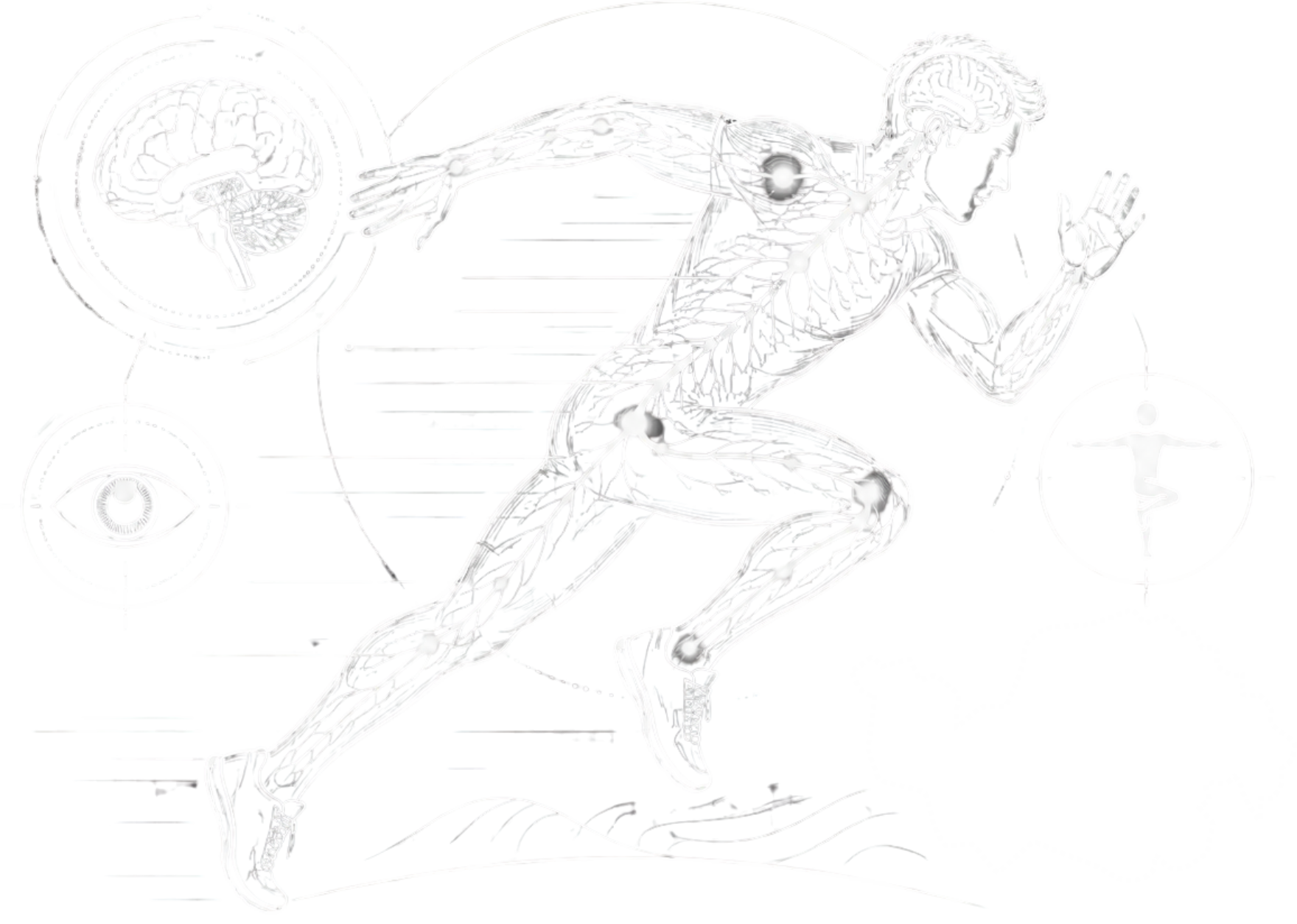
From information to performance
Perception
Vision · Balance · Body awareness
Processing
The nervous system evaluates, filters and decides
Movement
Reaction · Stability · Performance
What does a neurocentric assessment consider?
Depending on the sport, goal and starting situation, we assess the systems that may be relevant to reaction, stability, orientation and movement control.
Gaze stability
Eye movements, changes in focus and stable vision during movement.
Balance
Orientation, stability while standing and control during fast movements.
Body awareness
How precisely your system perceives joints, tension and positions.
Reaction & timing
How quickly perception is translated into appropriate movement.
Tension & stability
Whether your body can produce sufficient tension at the right moment.
Movement control
How precisely your system plans, starts and adapts movements.

Return to play
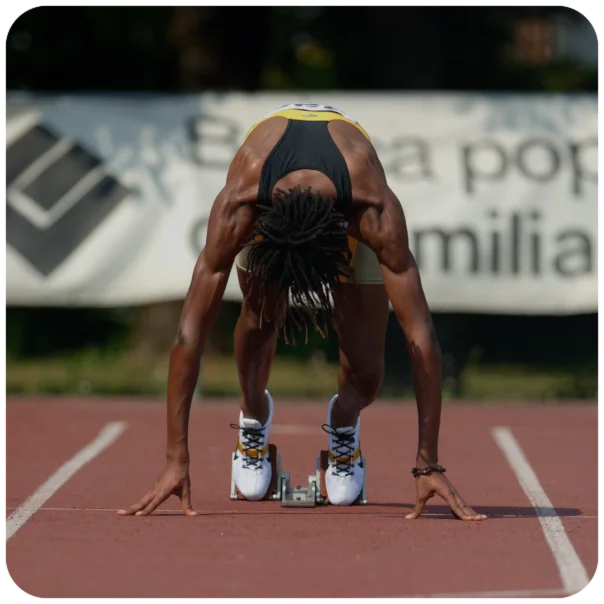
After an injury, strength, mobility and load tolerance are often checked for recovery. This is important, but often not the whole picture.
Many athletes still notice that changing direction feels uncertain, trust in movement is missing or one side feels different.
Neuroathletic training does not replace medical diagnosis, physiotherapy or rehabilitation. It may complement these areas functionally.
What happens at an appointment?
Neuroathletic training is not a general exercise programme. What matters is what your system shows in assessment. I therefore follow a clear process: clarify the goal, assess function, introduce an input and check again immediately.
Clarify the goal
We discuss your sport, goal, current situation, injury history and previous training.
Assess function
Depending on your concern, I may assess balance, eye movements, gaze stability, reaction or movement control.
Introduce an input
A targeted neurocentric input is introduced, suited to the findings in the assessment.
Re-test immediately
We then check whether stability, tension, mobility, coordination or the feeling of movement changes.
Assess rather than guess. An input only becomes a useful part of training if it helps your system.
Options for athletes and clubs
Neuroathletic training can be used in different ways: as an individual appointment, a functional screening or a practical introduction for coaches, teams and clubs.
Individual athlete appointment
For athletes with specific performance goals, uncertainty after injury or functional questions in training.
- individual neurocentric assessment
- direct comparison of test, input and re-test
- identify suitable elements for training
Neuroathletic screening
For athletes who want to understand which neurocentric factors may influence movement, stability, reaction or performance.
- assess gaze stability, balance and reaction
- identify strengths and possible performance limitations
- find initial starting points for training
Club or team format
For coaches, teams and clubs who want practical experience of neuroathletic training and to understand its place in training or performance development.
- workshop, introduction or practical session
- experience reaction, gaze stability and balance
- available for athletes, coaches or youth teams
Which format suits you or your club?
In a free first conversation, we briefly discuss your concern, whether an individual appointment, screening or club format would be useful and which next step fits.
Suitable for many sports
Neuroathletic training is always adapted to the sport, goal and starting situation. What matters is not the sport alone, but the demands your nervous system needs to manage in training or competition.
Does your system need to react quickly, land steadily, aim accurately, change direction, keep gaze stable or control movement precisely under load? This is where functional assessment begins.
Why work with Tino Both?
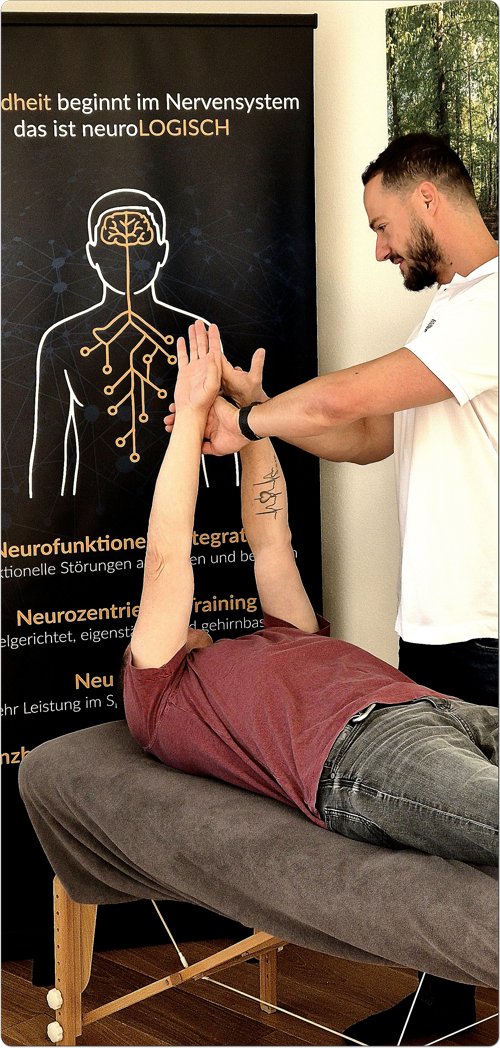
I work in Vilshofen with Applied Neurofunction, neuroathletic training and neurofunctional integration. My focus is to assess movement, performance and functional symptoms specifically rather than take a general approach.
This matters particularly in sport: sometimes the crucial performance limit lies in perception, reaction, stability or movement control rather than strength, endurance or technique.
My aim is to make conventional training more targeted, rather than replace it.
- Z-Health Master Practitioner with more than 1,250 hours of training
- Training in neurofunctional integration and neuromedical approaches
- Practice for Applied Neurofunction in Vilshofen / Lower Bavaria
- A functional, assessment-based approach for athletes, clubs and coaches
more suitable inputs rather than more exercises.
Would you like to know whether neuroathletic training suits you or your club?
In a free first conversation, we briefly discuss your concern, whether an individual appointment, screening or club format would be useful and which next step fits.
For athletes
If you want a functional look at reaction, stability, how movement feels or performance.
For coaches & clubs
If you want to explore neuroathletic training as an introduction, screening or workshop for your team.
Questions about neuroathletic training for athletes and clubs
Brief answers to common questions about neuroathletic training, training, injuries and club formats.
Is neuroathletic training only suitable for professional athletes?
No. It may be relevant to competitive athletes, ambitious recreational athletes, young people, club athletes and people returning to sport. What matters is whether reaction, stability, perception or movement control are involved, rather than the performance level.
Does neuroathletic training replace conventional athletic training?
No. Strength, endurance, mobility and technique remain important. Neuroathletic training complements conventional training by looking at the nervous system: how well does your system process information from vision, balance, body awareness and movement?
Can neuroathletic training be useful after injury?
After injury, a neurocentric perspective may be useful if movement still feels uncertain, one side is perceived differently or confidence in loading is missing. Medical diagnosis, physiotherapy and rehabilitation are not replaced, but may be complemented functionally.
Can neuroathletic training be used in a club?
Yes. Short introductions, screenings or workshops on reaction, gaze stability, balance, coordination and movement control are suitable for clubs. The format can be adapted for coaches, individual athletes, youth teams or whole teams.
How does this differ from ordinary reaction training?
Reaction training often uses external signals and quick responses. Neuroathletic training additionally asks why a reaction may be delayed, uncertain or inaccurate. Gaze stability, balance, orientation, tension or body awareness may play a part, for example.
How can I find out whether the approach suits me?
The easiest way is through a free first conversation. We briefly discuss your concern, sport, goals and whether an individual appointment, screening or club format would be useful.
More about neuroathletic training, performance and functional assessment
If you would like to explore further, you can find more information about neuroathletic training, performance, reaction, gaze stability and neurocentric training here.
Focus page: neuroathletic training & performance
The focus page offers a broader explanation of how neuroathletic training, the nervous system, perception and movement control relate to sporting performance.
Explore the neuroathletic training focus page