


Vision & visual processing
Visual vertical: why the room can feel tilted
Seeing upright and feeling upright are different tasks. How eyes, inner ear and body awareness enable orientation, and where functional assessment begins.
Read article ↗Knowledge & insights
Neuroathletic training, pain, dizziness, visual difficulties and functional symptoms — insights into Applied Neurofunction in Vilshofen.
37–48 of 138 articles · Page 4 of 12
Vision & visual processing
Seeing upright and feeling upright are different tasks. How eyes, inner ear and body awareness enable orientation, and where functional assessment begins.
Read article ↗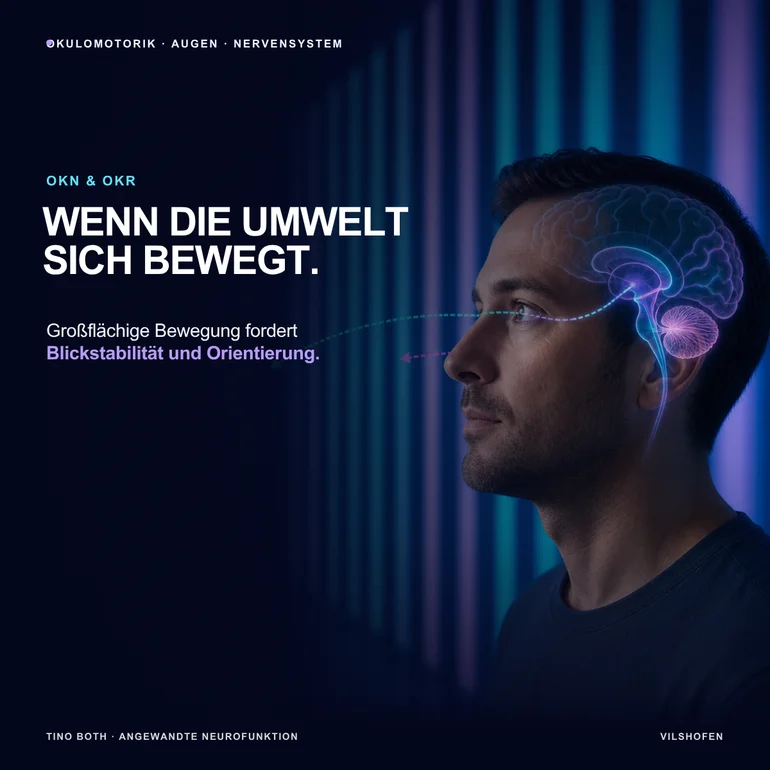
Vision & visual processing
Following and resetting: what happens when looking at a moving scene and why a fast striped video is not automatically a suitable exercise.
Read article ↗
Vision & visual processing
The vestibulo-ocular reflex, or VOR, stabilises gaze while the head moves. The nervous system couples the balance organ and eyes so that print, faces and surroundings remain as clear as possible. If this coupling is imprecise or demanding, dizziness, visual instability, walking unsteadiness or problems in sport and movement can develop.
Read article ↗
Vision & visual processing
Gaze moves from the screen into the room, but sharpness does not immediately follow. Why aligning both eyes and focusing are two different tasks and how their cooperation is assessed.
Read article ↗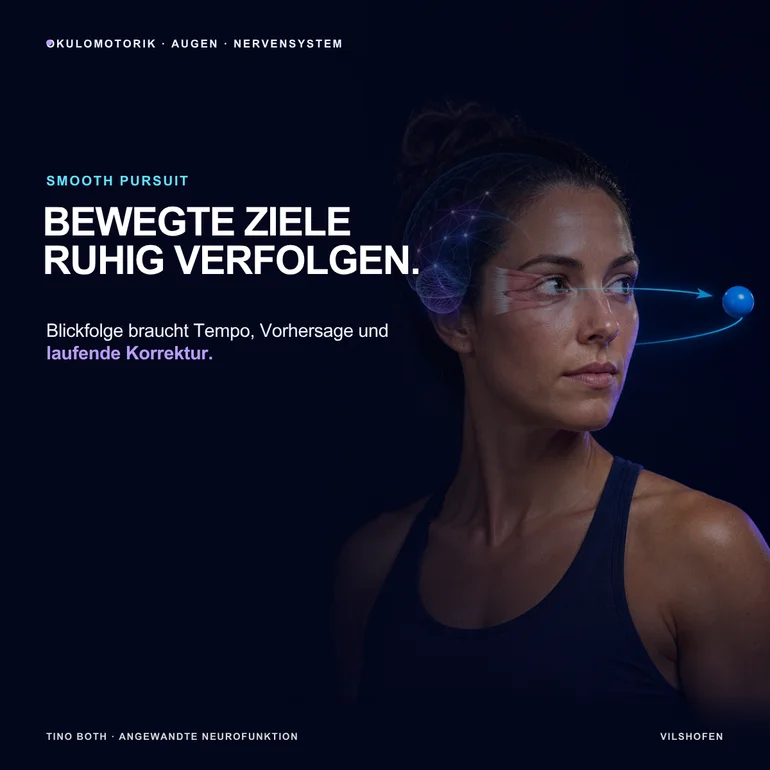
Vision & visual processing
A target moves and the eyes stay with it. Why speed and task instructions matter and how tracking becomes a useful functional comparison.
Read article ↗
Vision & visual processing
Not looking as quickly as possible, but arriving precisely: how gaze shifts work and the roles of target selection, steady gaze and the everyday situation.
Read article ↗
Vision & visual processing
Looking steadily does not mean staring rigidly. How small eye movements, target distance and demands interact, and how I turn this into a specific assessment question.
Read article ↗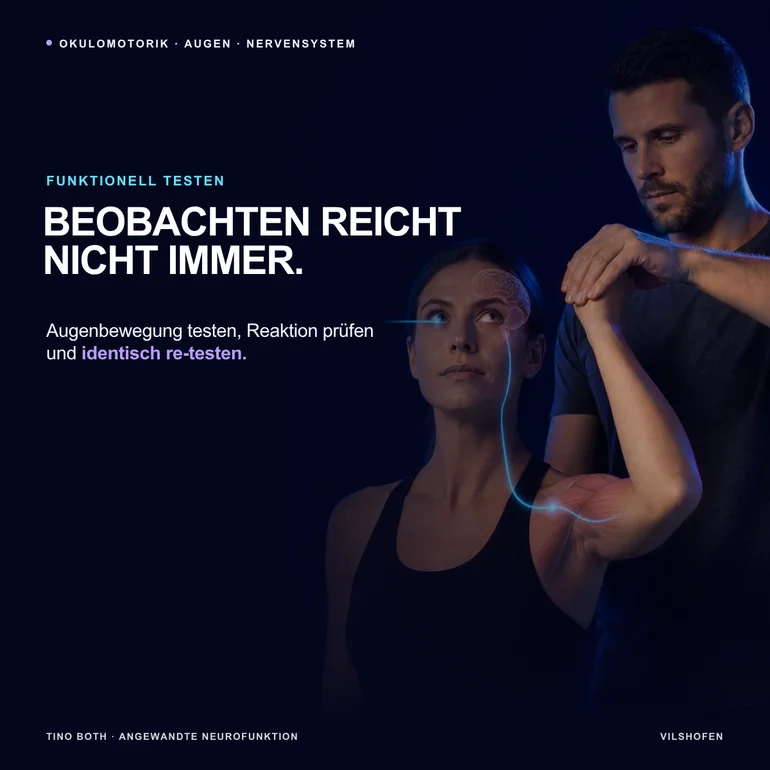
Vision & visual processing
Holding a gaze position, tracking a target or moving the head are different tasks. A practical assessment example shows why ‘strong’ is not always automatically the appropriate muscle response either.
Read article ↗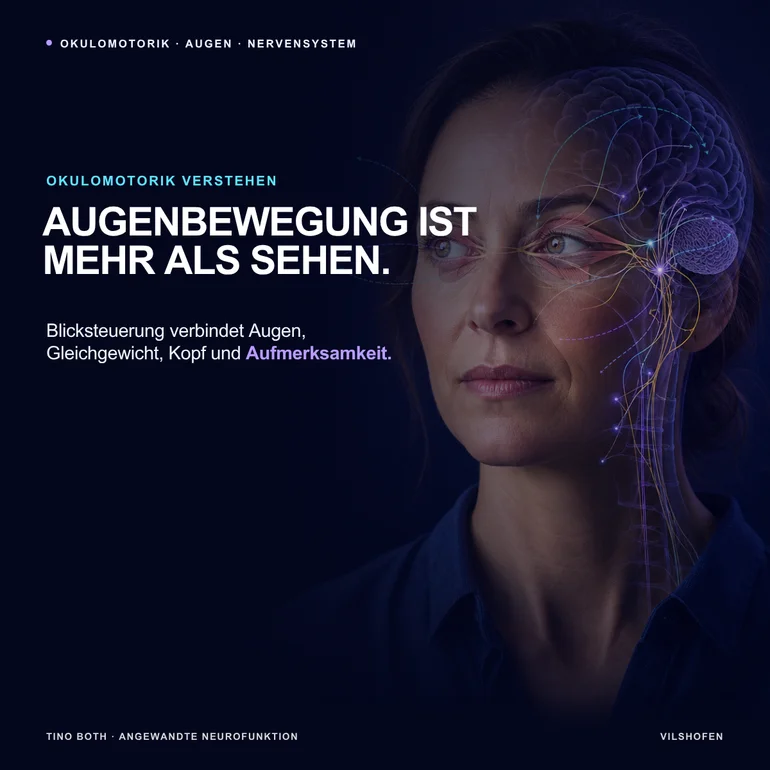
Vision & visual processing
A vision test is only one task among many. This overview shows how holding gaze, gaze shifts, tracking and head–eye coordination differ.
Read article ↗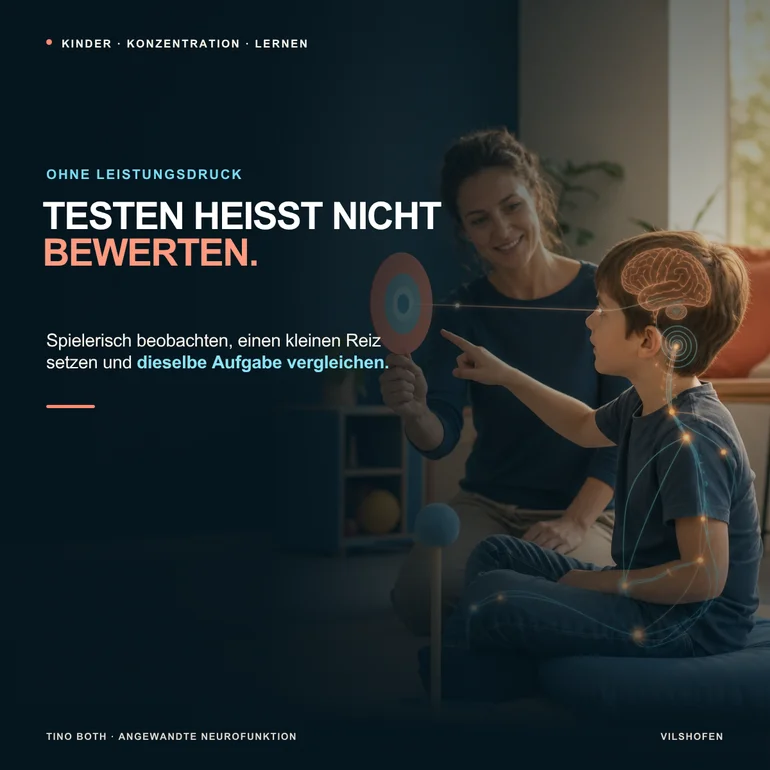
Children, concentration & learning
What happens at an appointment, and what does your child need to be able to do? An understandable insight from the first everyday example through NeuroFI assessment to a suitable next step.
Read article ↗
Children, concentration & learning
Look beyond the finished handwriting: How hand movements, shifts of gaze and working position interact and can be compared separately.
Read article ↗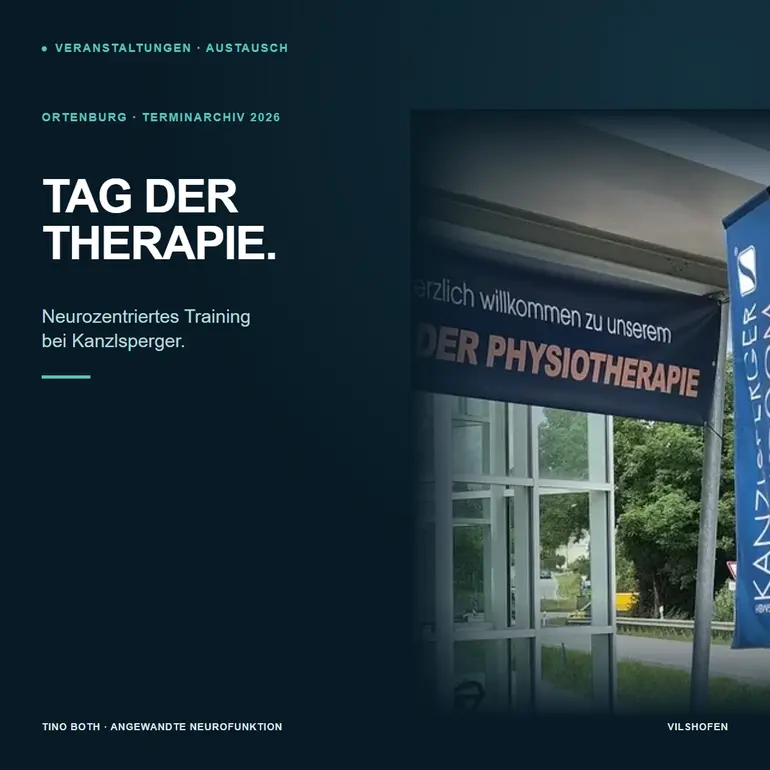
Professional development and events
The programme and my announced contribution to Therapy Day on 18 July 2026. The event has passed; enquiries about individual training sessions are still welcome.
Read article ↗No articles found. Try a different search or topic.